Make and model: Hyundai Ioniq 9
Description: Large electric SUV
Price range: £64,995 to £75,795
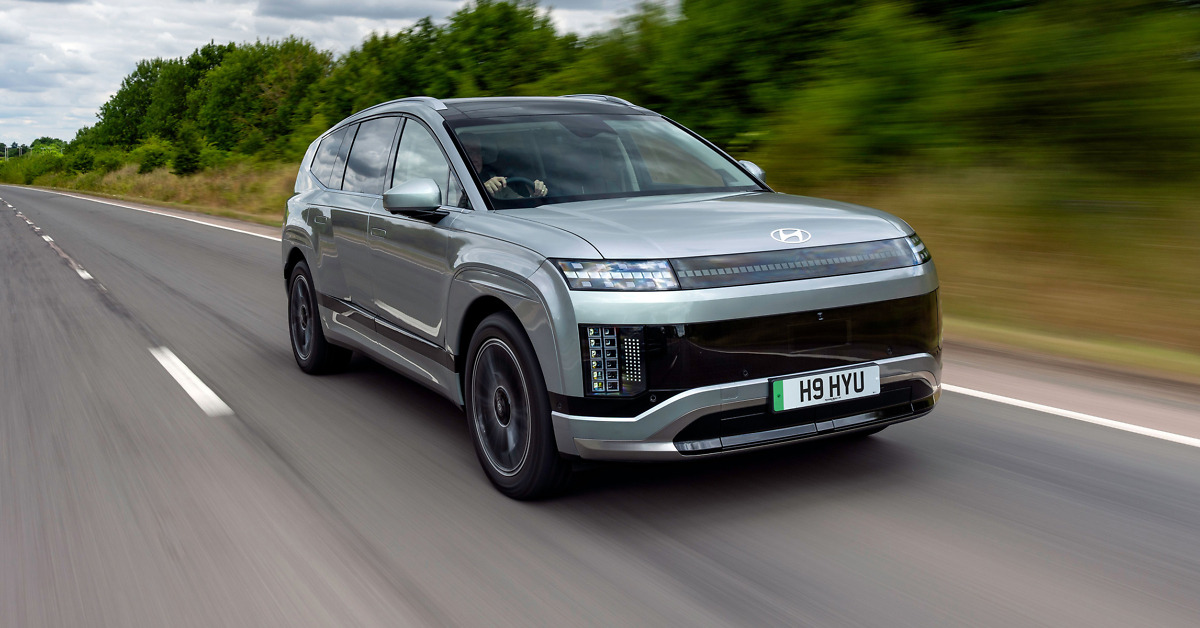
Summary: The Hyundai Ioniq 9 is a big, refined electric SUV for families who need six or seven seats and long-distance comfort. It’s expensive and feels its size in corners, but it offers plenty of space, equipment and driving range.
For a broader ownership picture, see our Hyundai Ioniq 9 Expert Rating, which combines media reviews, safety data, reliability, running costs and warranty cover.
The Hyundai Ioniq 9 arrived on UK roads in autumn 2025 as the brand’s new flagship electric model. It also rounded off a strong period for Hyundai at The Car Expert’s Car of the Year awards, taking the Best Large Car 2026 award while its smaller sister, theInster, named Best Small Car 2026.
The Ioniq 9 sits above the Ioniq 5 and Ioniq 6 in Hyundai’s electric range, scaling the same broad idea up into a large SUV with up to seven seats. It is closely related to the Kia EV9 and will also be considered against larger electric models such as the BMW iX, Mercedes-Benz EQE SUV and even the Volkswagen ID. Buzz.
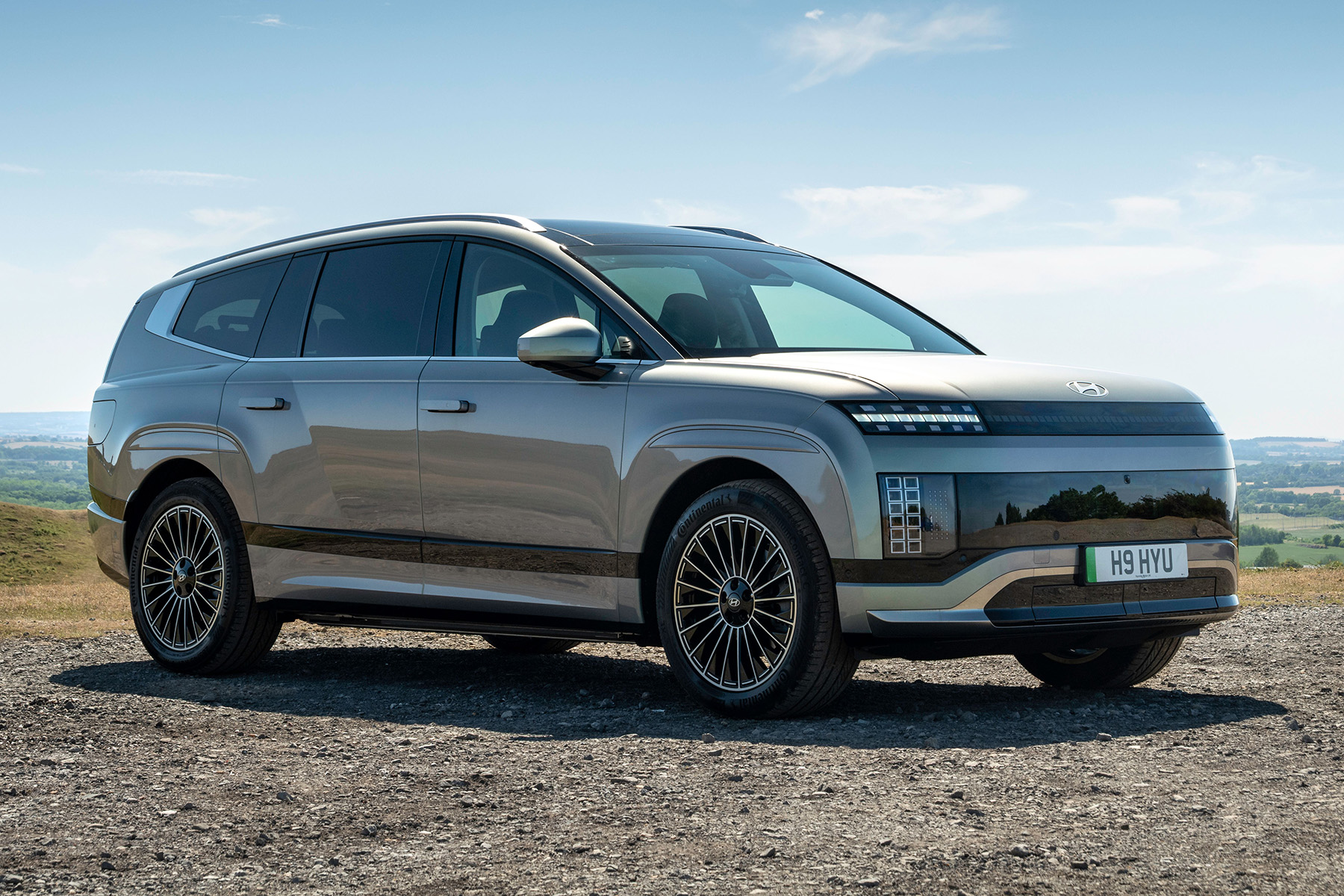
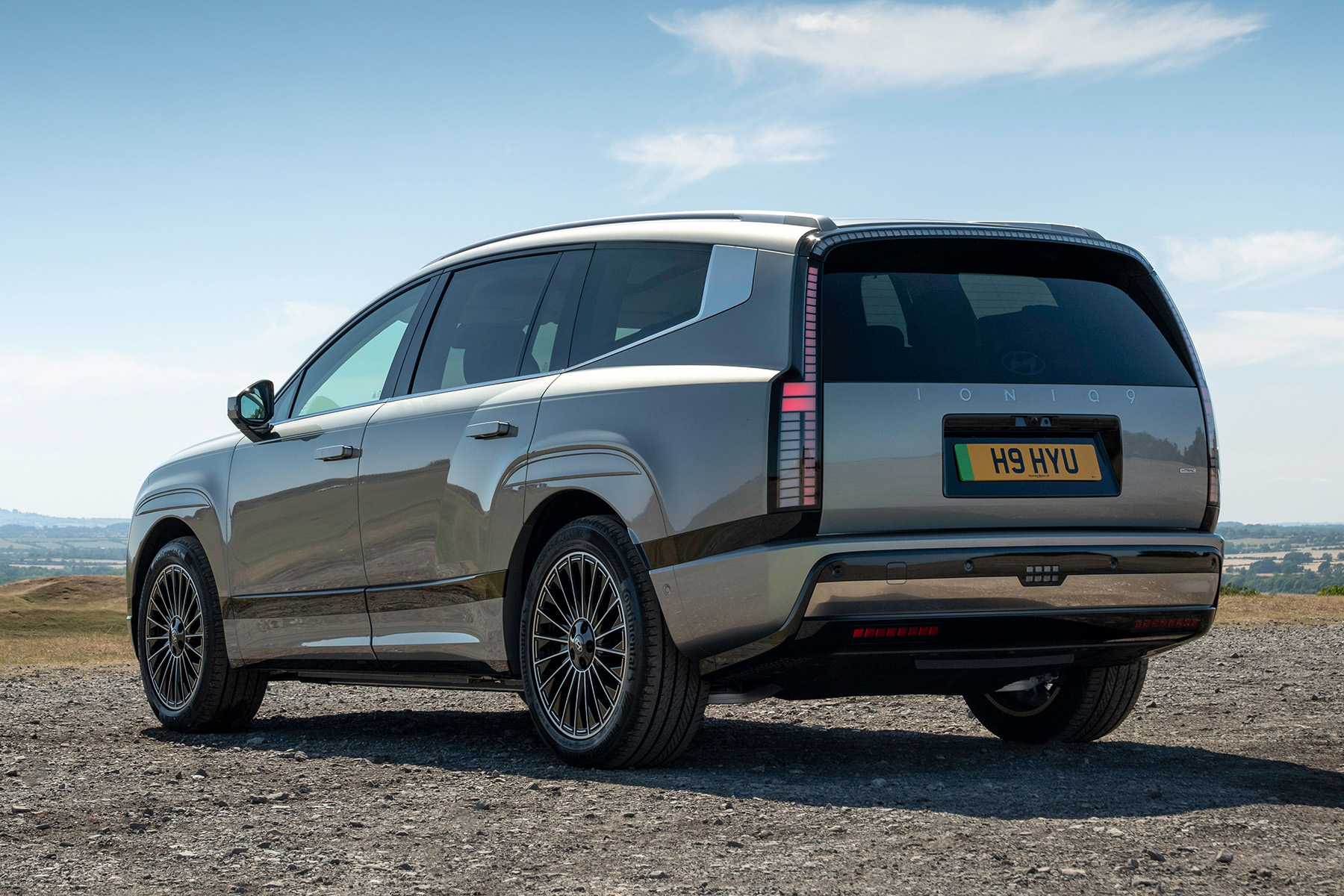
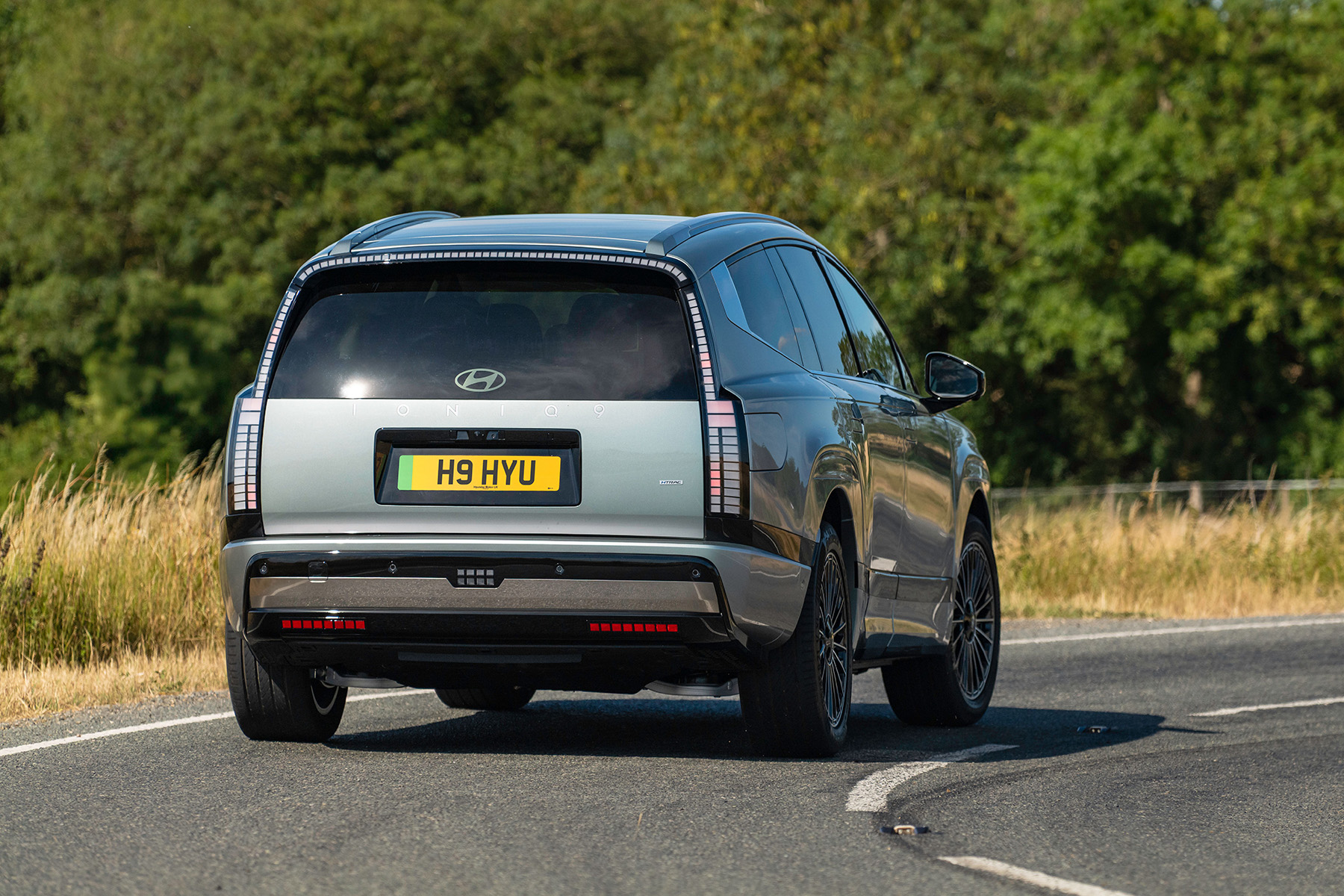
There’s no hiding the size. At five metres long and weighing between roughly 2.4 and 2.75 tonnes depending on the model, the Ioniq 9 is a big car. To our eyes, it just edges the Kia EV9 for styling, particularly at the front, where it looks less blunt.
Price and equipment
The Ioniq 9 is currently sold in three trim levels and with three powertrain options, all using a 110kWh battery.
The line-up starts with the Premium, priced from £65K. This comes only in rear-wheel-drive form, with a 218hp electric motor. Above that, the Ultimate switches to all-wheel drive and has 307hp. Calligraphy models add more equipment and are available with up to 427hp, while a six-seat luxury version is also offered.
Standard equipment is generous, even on the entry-level Premium. It includes heated seats in the first two rows, ventilation and electric adjustment for the front seats, a heated steering wheel, powered tailgate, three-zone climate control, a 12-inch driver display, a 12-inch central touchscreen and charging points in all three rows. Wireless phone charging is also fitted up front.
Step up to Ultimate and the wheels grow from 19 to 20 inches. You also get a panoramic sunroof, a head-up display for the driver, leather upholstery, more seat adjustment, massaging for the driver’s seat, ventilated second-row seats, a power-folding third row and a Bose 14-speaker sound system.
Top-level Calligraphy models add even larger 21-inch wheels, further body enhancements, Nappa leather and the option of digital side mirrors. On the six-seat version, the centre console can slide and the second-row seats can rotate to face the third row when the car is parked.
The Ioniq 9 received a five-star safety rating from Euro NCAP, and it’s good to see that almost all of its electronic safety aids are standard across the range. It would be better if the useful camera-based blind spot monitor was also available on the base Premium model.
Inside the car
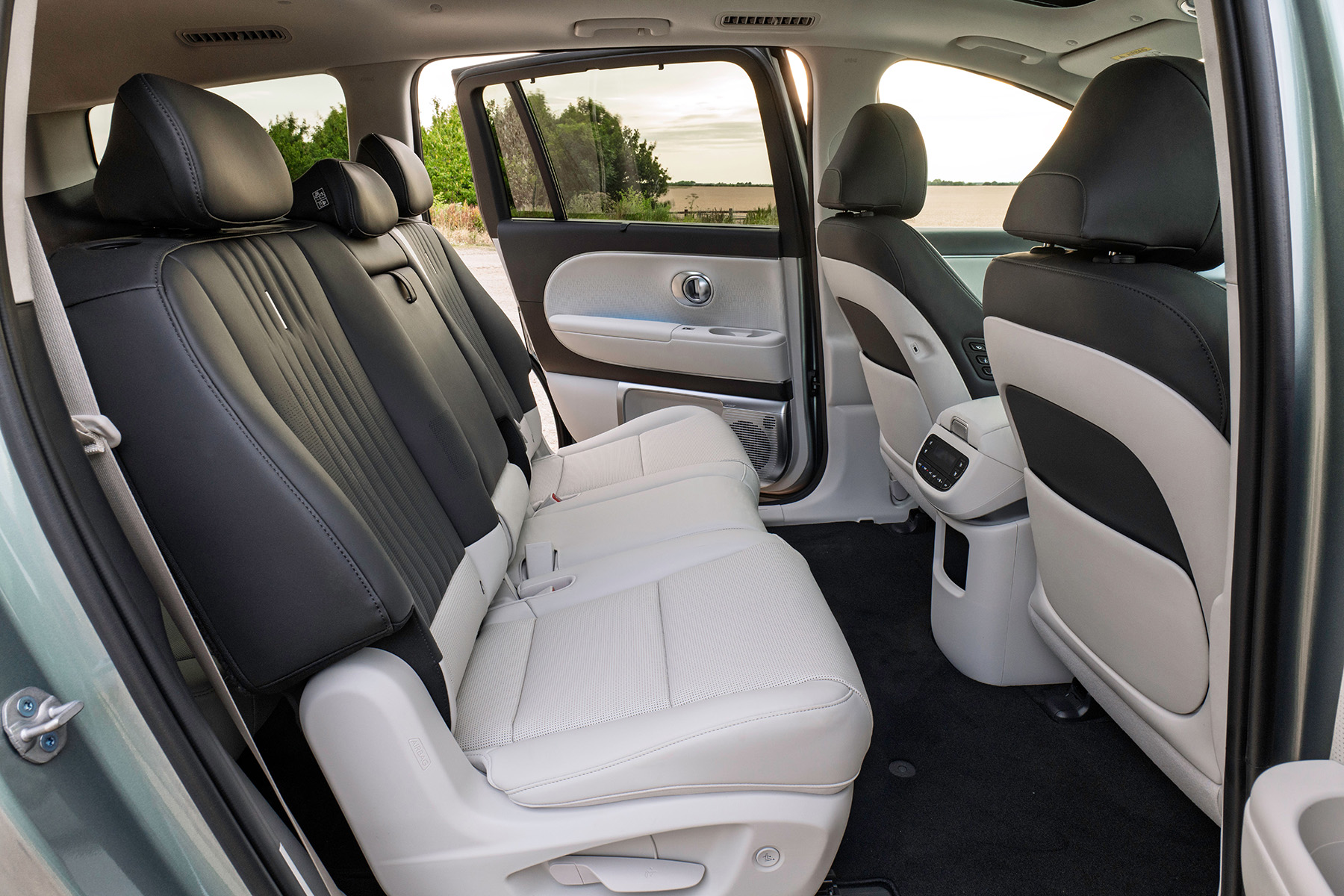
The Ioniq 9 feels as large inside as it looks from the outside. Our Premium test car came in seven-seat form, and the first two rows are exceptionally roomy. The third row is inevitably more snug, as it is in most seven-seat cars, but it’s better than most.
Boot space is still reasonable with all seats in use, and huge once the rear seats are folded. There is also a separate 88-litre front boot, or ‘frunk’, on rear-wheel-drive models. This drops to 52 litres on all-wheel-drive versions, but either way most owners will probably use it for charging cables.
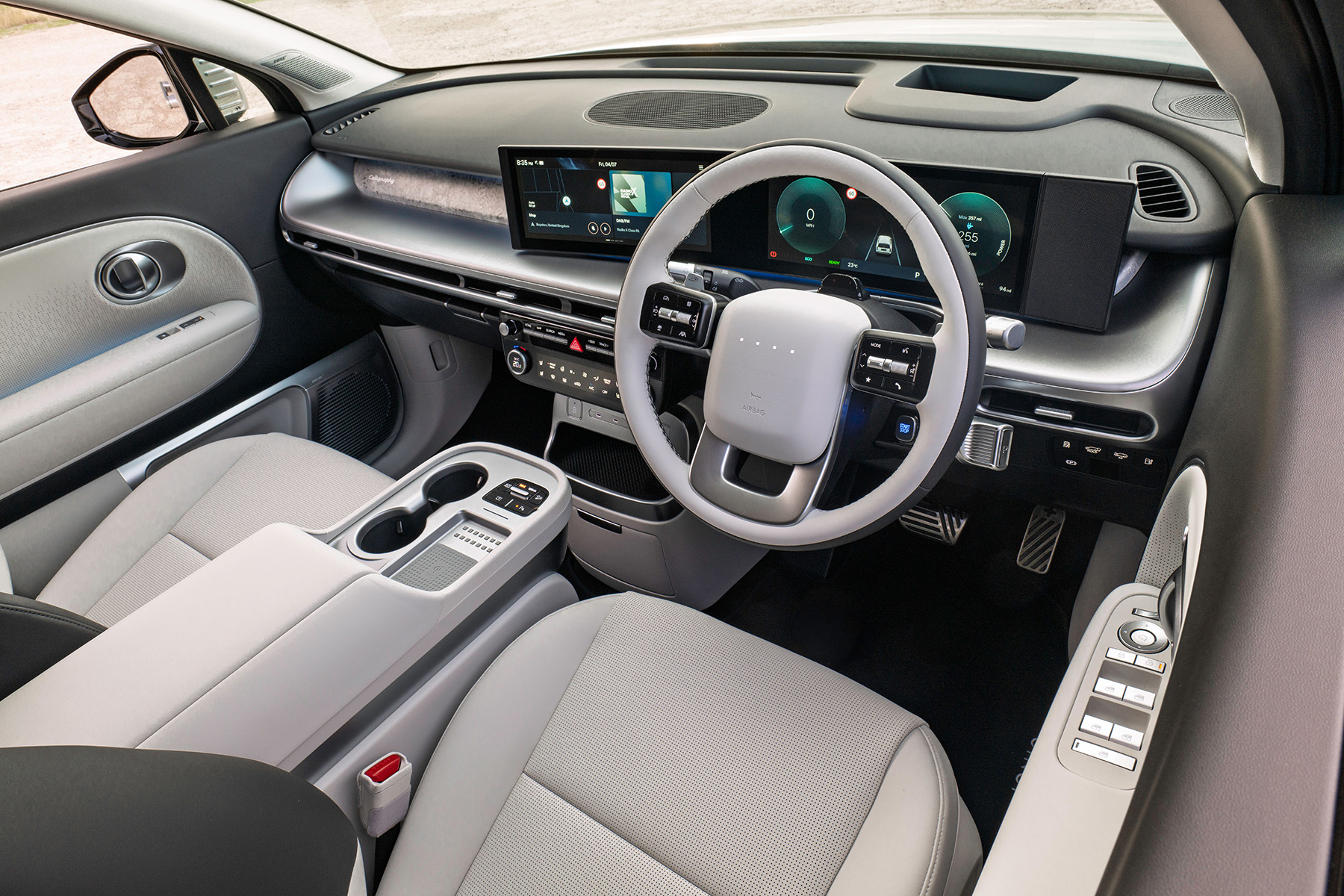
The front of the cabin will be familiar to anyone who has driven another Ioniq model. A long, curved panel sits on top of the dashboard and contains twin 12-inch displays – a central touchscreen and another screen in front of the driver.
One definite plus is the separate panel lower down on the centre console, which houses physical buttons for the climate control. That’s welcome, because the touchscreen itself can be confusing in places, and it’s better not to bury basic functions in menus.
As Hyundai’s flagship electric model, the Ioniq 9 needs to feel more upmarket than the brand’s smaller cars. It largely succeeds. The cabin is spacious, comfortable and pleasant to spend time in, whether you’re driving or being driven.
Driving range and charging
All versions of the Ioniq 9 use a 110kWh battery, which gives the car an impressive official driving range.
The rear-wheel-drive Premium has the longest official figure, at 385 miles. The all-wheel-drive models are only slightly behind, with the Ultimate rated at 376 miles and the Calligraphy at 372 miles.
All versions can use public chargers of up to 350kW, giving a 10% to 80% charge in about 24 minutes. On a 50kW charger, the same charge will take one hour and 49 minutes. Using an 11kW home wallbox, a full charge takes about ten hours.
Those are strong numbers for such a large and heavy SUV, and they suit the Ioniq 9’s role as a long-distance family car.
On the road
Behind the wheel, one of the first things you notice is a neat touch: the start button is built into the end of the right-hand steering wheel stalk, which also selects drive. It avoids taking up unnecessary space on the dashboard.
It’s also good to see proper regenerative braking paddles behind the wheel. These allow you to adjust the braking effect without having to dig into the touchscreen, and can increase the regeneration to a level that allows near one-pedal driving.
Our Premium-spec test car had 218hp, giving a 0-62mph time of 9.4 seconds. The 307hp all-wheel-drive models cut that to 6.7 seconds, while the 427hp version brings it down to 5.2 seconds.
The Premium does not feel especially quick, but it is fast enough for the way most owners are likely to use this car. The Ioniq 9 is at its best when driven calmly, where its smooth power delivery and quiet cabin make it a relaxing car for long journeys.
The drive modes include a Sport setting, which makes the car feel a little more eager without changing its basic character. It remains refined and smooth, which is exactly what most buyers in this part of the market will want.
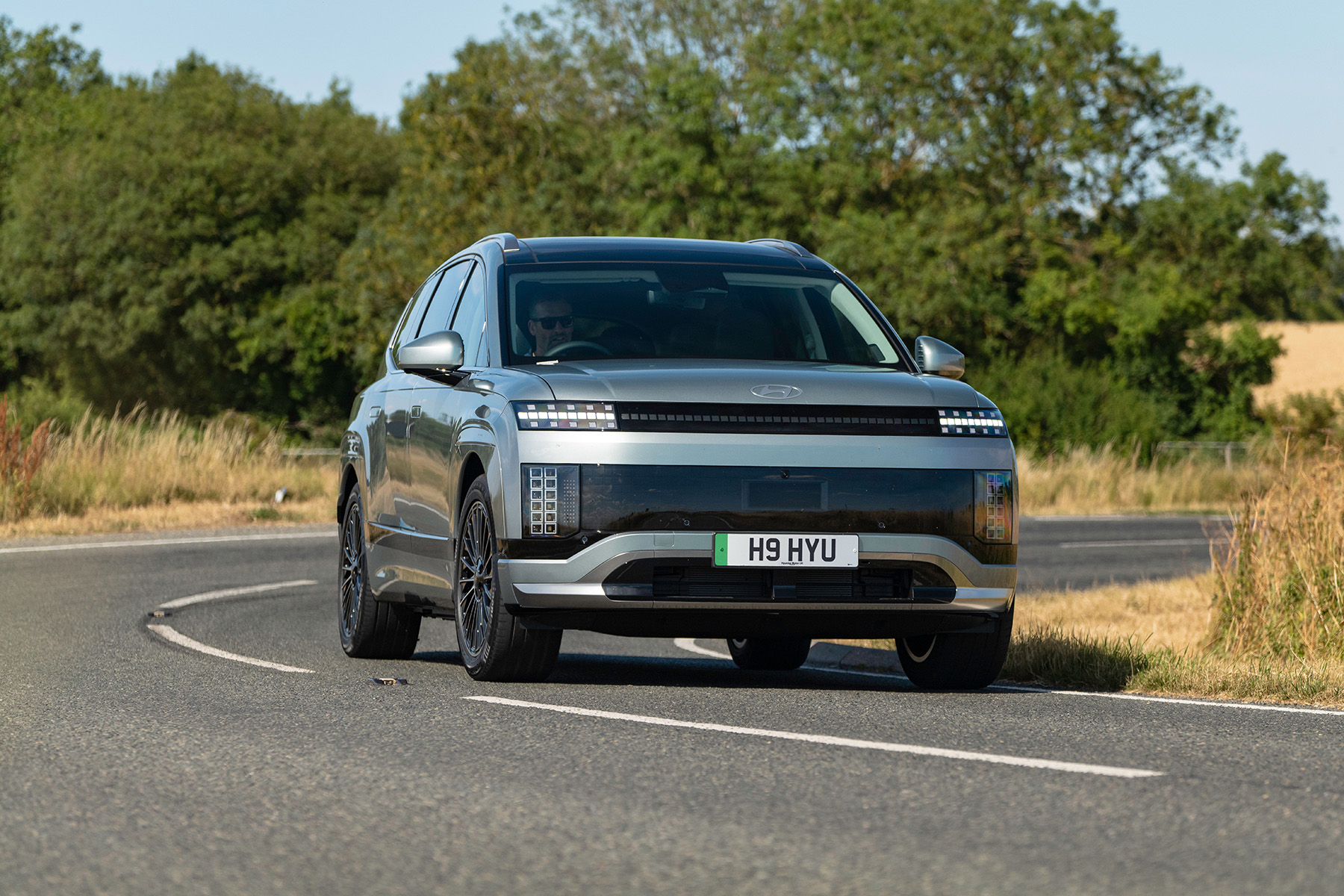
The ride is generally comfortable, although it can feel firm at times. The car is less convincing in corners, where its size and weight are more obvious. It turns in rather ponderously, and there is no disguising how much car you are moving around.
Even so, everything remains well controlled. The Ioniq 9 is not a sharp or involving SUV to drive, but it does a competent job on the road and feels most convincing as a refined long-distance cruiser.
Verdict
Mainstream manufacturers are not usually known for luxury models, but the Hyundai Ioniq 9 gets closer than most. It offers a huge cabin, useful seven-seat practicality, a long official driving range and a calm, refined driving experience.
It is expensive, and it never feels small from behind the wheel. If you want something sharp, compact or genuinely engaging to drive, this is not it.
But that is not what the Ioniq 9 is trying to be. For families who need to carry six or seven people over long distances in comfort, it makes a strong case. The flagship status comes at a price, but you do get a lot of car – in both size and equipment – for your money.
We like:
- Roomy in all seven seats
- Refined on the road
- Long driving range
- Lots of standard equipment
- Proper climate control buttons
We don’t like:
- Ride can feel firm
- Feels big and soft in corners
- Touchscreen can be confusing
- Expensive
Similar cars
BMW iX | BMW iX5 | BYD Ti7 | Denza B5 | Kia EV9 | Mercedes-Benz EQE SUV | Mercedes-Benz EQS SUV | Polestar 3 | Range Rover plug-in hybrid | Tesla Model X | Volkswagen ID. Buzz | Volvo EX90
Key specifications
Models tested: Hyundai Ioniq 9 Premium Long Range
Price as tested: £65,745
Powertrain: 110kWh battery, electric motor
Gearbox: Automatic
Power: 218 hp
Torque: 350 Nm
Top speed: 118 mph
0-62mph: 9.4 seconds
Battery range: 385 miles
CO2 emissions: 0 g/km
Euro NCAP safety rating: Five stars (September 2025)
TCE Expert rating: A, 80% (June 2026)