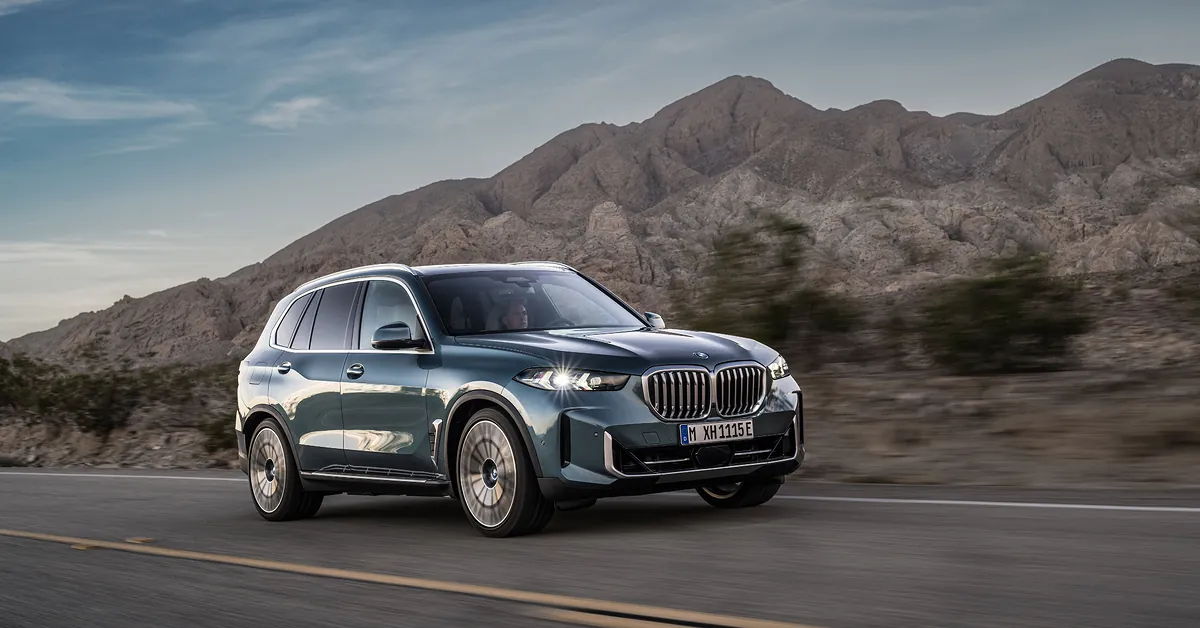
For many years there were two German behemoths that divided up the premium market – BMW and Mercedes-Benz. Audi was a much smaller badge in the Volkswagen group that merited little attention.
Over the past 25 years, however, Audi has grown massively to turn the big two into a big three. It has done this by embracing technology and offering models that initially provided something different to the BMWs that every middle-manager wanted to drive, and latterly took over that much-vaunted status. In fact where for many years ‘typical BMW driver’ was used as a derogatory term (perhaps with a hint of jealousy), today it is just as often applied to Audi drivers.
Such criticisms make little dent on the reputation of a manufacturer that continues to produce impressive cars with bang up-to-date technology, and which while adopting the opportunities of electric power long before rivals, still offers a wide range of petrol and even diesel options.
This was set to change with Audi planning to launch its last ‘conventionally driven’ models in 2026, but like many others the company has reacted to the slowing of the global switch to EVs. Audi announced in mid-2025 that it had abandoned plans to not sell any cars with combustion engines after 2033. Now Audi says there is no fixed end-date for such models.
So who or what is Audi?
This section could probably be described as “A tale of two Audis”, because the company of today is much younger than its name or badge. The original version of Audi disappeared with the second world war, and the name was resurrected by Volkswagen in the 1960s.
Audi 1.0 was founded in 1909 by a German engineer named August Horch. It was Horch’s second attempt at starting a car company, as he left his original company – Horch – after falling out with his fellow directors. He used the name ‘Audi’ as his former partners prevented him using the Horch name again.
Audi flourished despite difficult conditions in Germany following the first world war. However, as part of a series of mergers and acquisitions in the early 1930s, Audi became part of a conglomerate called the Auto Union. This consisted of four German brands: Audi, DKW, Wanderer and – ironically – Horch.
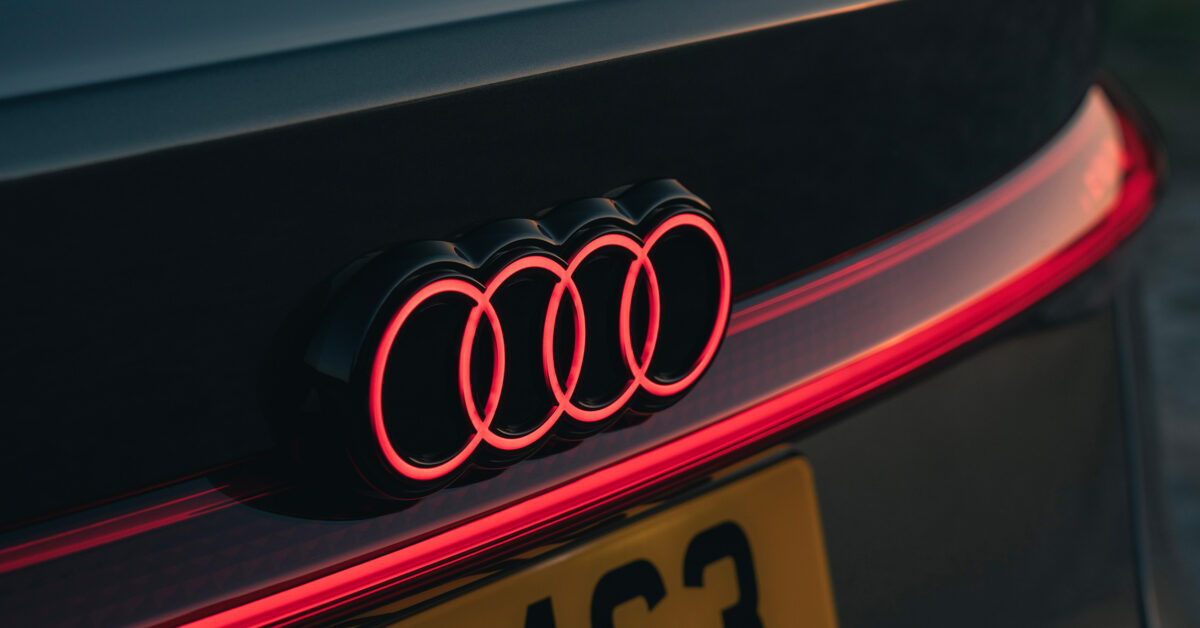
Although the four brands all continued to build their own cars, each also carried the new logo of Auto Union – four interlocking rings to symbolise the four interlinked brands.
Despite the high profile and success of Auto Union, Audi suffered relative to its sister brands. Sales were well in decline even before production was inevitably turned over to manufacturing vehicles for the German military as the second world war loomed.
As with most German industrial operations, the second world war was a dark time for Auto Union. As many as seven labour camps provided thousands of prisoners to build vehicles and armaments for the Nazis. By the end of the war, the company was all but wiped out with most of its factories bombed and destroyed by the Allies.
After hostilities had ceased, Auto Union bosses set about restarting the company despite there being little more than the brand names left. What remained of its factories were located in the east of Germany, which fell under Soviet control after the war, so Auto Union re-established itself in the town of Ingolstadt in Bavaria, in the south of West Germany.
The revived Auto Union struggled and was bought out by Daimler-Benz (owners of Mercedes-Benz) in 1959, but Daimler quickly realised that it had no real need for Auto Union or its collection of brand names and sold it off to Volkswagen not five years later. VW wasn’t really interested in Auto Union, either, but it wanted to get its hands on the Ingolstadt factory to help meet booming worldwide demand for the Beetle.
Eventually, Volkswagen did decide to make a go of some of the cars that Auto Union had been developing under Daimler’s ownership. It kept the Auto Union logo, but ditched the name and resurrected the long-abandoned Audi brand instead. Audi 2.0 was born.
Through the 1970s, Audi grew and developed as a respected but conservative brand. To spice things up a bit, the company decided to use Volkswagen’s abandoned all-wheel drive military technology to go rallying.
Launched in 1980, the Audi Quattro was the first mainstream all-wheel-drive car on the market. It took a string of rallying successes and transformed Audi’s image from a fairly staid brand to a technological powerhouse. Soon afterwards, the slogan ‘Vorsprung durch Technik’ (progress through technology) made its debut and is still a core of Audi’s marketing today.


The 1990s saw Audi move upmarket to become a premium manufacturer, targeting the business market and the two German heavyweights of BMW and Mercedes-Benz. Sales were fuelled by an ever-increasing model range, and promoted by major sporting success – in the 15 years from 2000 to 2014, Audi won the Le Mans 24-hour race 13 times.
Advanced technology has continued to play a core role in Audi’s continually advancing sales ever since, such innovations as digital cockpit displays and various driving aids appearing on Audi models before many rivals. At one point in the 2000s, Audi produced more profit than all the other brands in the Volkswagen Group combined.
More recent times have been less successful, however – 2024 and 2025 proved particularly difficult years as Audi suffered from slowing demand for EVs and the effect of US President Donald Trump’s new tariffs in what is an important market for the German brand. Audi’s 2025 sales in the UK slumped by more than 9%.
Perhaps stung into action Audi management are now undertaking what they describe as the biggest change in the history of the company. Forthcoming new models such as the next A4 will be core to a complete rebuild but the changes will apparently stretch way beyond Audi’s products.
What models does Audi have and what else is coming?
The development of electric power has seen Audi’s enormous model range swell even further, although it has always seemed to be in less of a hurry to drop its combustion-engined models than many other brands.
The main designators are A for traditional cars and Q for SUVs. The more performance-pitched models usually carry S designations (so the S3 is a faster version of the A3, for example), while the most highly potent versions are badged RS (so the RS 3 is an even faster version of the A3).
Audi decided early in 2025 to drop plans to differentiate its combustion-engined and electric ranges by their model numbers – the idea had been that petrol/diesel/hybrid models would carry odd numbers (like A1, A3, A5 and A7), while electric models – called ‘e-tron’ in Audiland – would carry even numbers (A6 e-tron saloon, Q4, Q6 and Q8 e-tron SUVs and such).
Now both types will carry the same model numbers with what drives them indicated by the addition of TFSI (petrol), TDI (diesel), or e-tron (electric) after the model name.
Meanwhile the Audi range has undergone some recent trimming as the brand reacts to more challenging market conditions, with the biggest casualties being its two smallest cars. The Q1 SUV has already been dropped and while the A1 – Audi’s alternative to BMW’s Mini – remains on sale, it will not be replaced.
Audi’s traditional car range progresses up through the A3, A5, A6 and A8. There are S versions of the A3, A5 and A8 and RS models of the A3 and A5, while the A5 and A6 can also be had with Avant (estate) bodystyles.
The change in naming strategy saw a new A6 launched in 2025 to replace the previous A7 and in petrol, diesel and plug-in hybrid variants, alongside the electric version, now called the A6 e-tron and a completely different car to its fossil-fuelled sibling – confused yet?
On the SUV side, we have the Q2, Q3, Q5, Q7 and Q8 in fossil-fuel versions (and all available in more potent S form), and the Q4 e-tron and Q6 e-tron electric models. The Q3 and Q5 gained all-new versions in 2025 which include coupe-like Sportback models, while the Q8 e-tron, which was Audi’s first production electric car and again confusingly a completely different vehicle to the fossil-fuelled Q8, has been replaced by the latest Q6 e-tron.
The Q8 can also be had as an RS model, as can the e-tron GT, this being a sporty large electric saloon that is more or less an Audi-badged and styled Porsche Taycan.
Finally there are a wide range of powertrain options in the combustion-engined models. Most models include a plug-in hybrid in their line-up, while the A3, A5, A6, A8, Q3 and Q8 can even be had with diesel engines – the oil burner is not dead yet.
Current Audi range on our Expert Rating Index
In terms of new Audi models soonest to arrive is likely to be the Q9, an enormous seven-seat SUV to take on the BMW X7 and Mercedes-Benz GLS – we expect to see this in 2026.
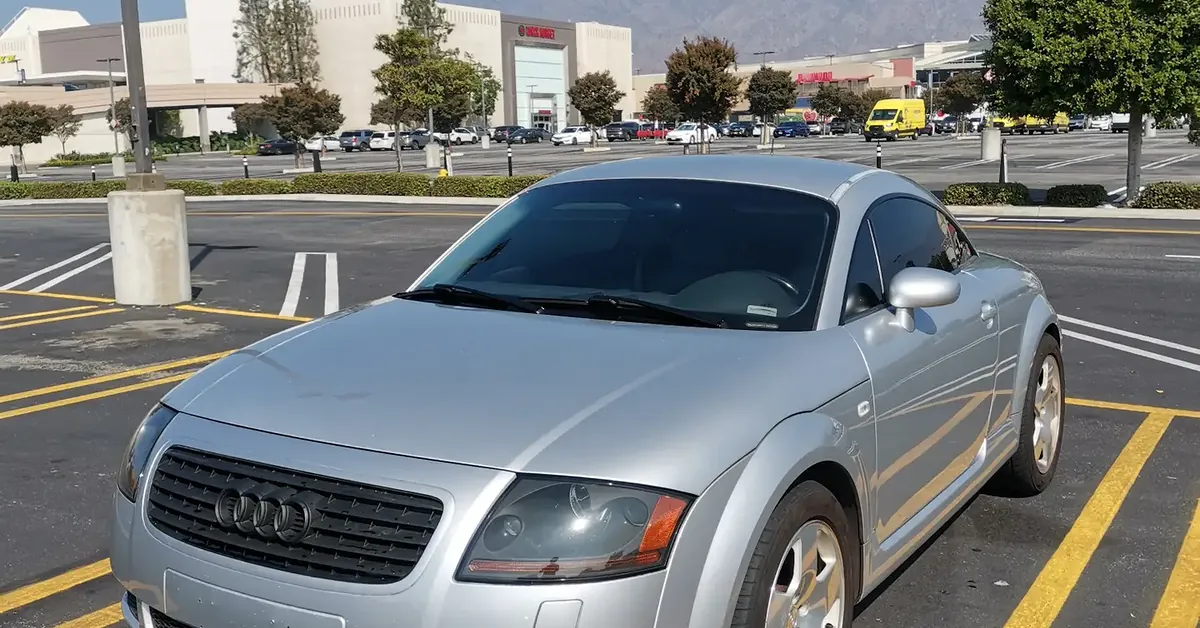
Audi has moved away from its once much-desired sports models in recent times with neither the TT and R8 two-seater coupes and convertibles, or the sporty and drop-top variants of the A5 being replaced. But this may be about to change.
One of the most eagerly awaited new cars from the brand is a production version of the Concept C shown at the Munich motor show in September 2025. Apparently dubbed the C-Sport within Audi but seen by most observers as an electric successor to the long-lived TT coupe, the two-seater is being jointly developed with Porsche and is set to be unveiled in 2027.
The striking styling of the Concept C, dubbed ‘Radical Next’ by Audi, will also be seen on the next-generation A4, which is due in 2028. For many years a core Audi model, the next A4 will be an e-tron.
Where can I try a Audi car?
You won’t miss an Audi dealership – the brand has a distinctive design for its showrooms right down to the basic structure of the building, and they tend to dominate their surroundings. There are plenty of them around, the UK hosting around 130 Audi centres though more than 100 are in England.
What makes Audi different to the rest?
Audi built its reputation initially on being something different when any moderately successful business executive wanted to drive a BMW, and as the company’s reputation grew it bolstered it by its massive investment in technology.
Even today, when most upmarket manufacturers offer models with the latest electronic advances both in safety, driver aids and interior features such as infotainment and connectivity, you still expect to see the newest advances on an Audi first – this is expected to ramp up in coming years, with “next-level” technology promised on the forthcoming Audi A4.
An Audi fact to impress your friends
Audi’s name is Latin – after founder August Horch left his original company, which he’d named after himself, the German courts determined that he couldn’t take the company name with him.
So Horch called a meeting in the apartment of a business friend in an effort to come up with a new name – as the business brains in the room struggled to come up with something suitable the friend’s son, who was quietly doing his Latin homework as the meeting went on, eventually spoke up and said that as Horch meant ‘hear’ in German, why not use the closest Latin translation, which was to ‘listen’ – ‘Audi’…

Summary
Audi is today one of the world’s major executive car brands with a huge reputation, and even though there are now a lot more Audis on the roads, many owners still feel that being behind the wheel of one is a little bit special.
Buy an Audi
If you’re looking to buy a new or used Audi, The Car Expert’s partners can help you find the right car.
Lease an Audi
If you’re looking to lease a new Audi, The Car Expert’s partners can help you find a competitive deal.

Personal contract hire deals from Carparison Leasing. Find out more

Personal contract hire deals from Rivervale Leasing. Find out more
This article was originally published in August 2024 and updated in February 2026.