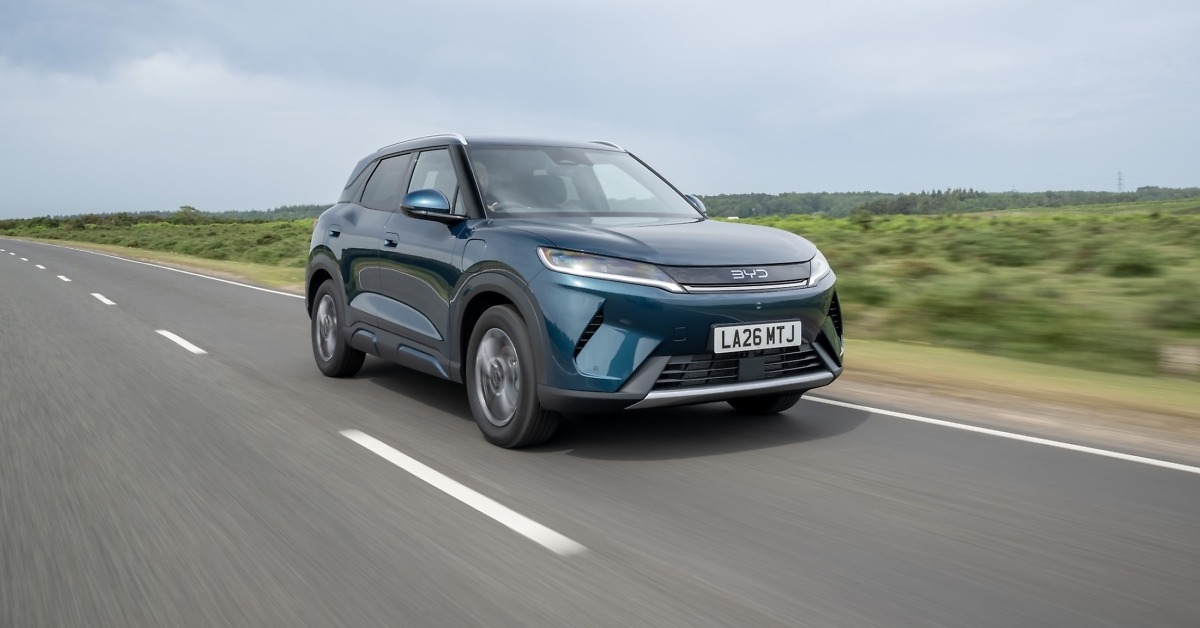
Make and model: BYD Atto 2 DM-i
Description: Small plug-in hybrid SUV
Price range: £26,995 to £29,995
Summary: The BYD Atto 2 plug-in hybrid is very well priced and the Boost model has useful electric range, but the car itself is fairly forgettable.
The BYD Atto 2 plug-in hybrid is the latest model in BYD’s growing range of petrol-electric cars. BYD calls it the Atto 2 DM-i, but that is simply the company’s name for a plug-in hybrid, so we’ll call it the BYD Atto 2 plug-in hybrid from here.
It is based on the same basic vehicle as the electric BYD Atto 2, but swaps that car’s full electric drivetrain for a 1.5-litre petrol engine, an electric motor and a smaller battery pack. It joins the larger Sealion 5, Seal U and Seal 6 models as part of BYD’s push into plug-in hybrids, an area where the Chinese brands are currently moving very quickly.
There are two versions, called Active and Boost. The lower-spec Active model has 166hp, an 8kWh battery and an official electric-only driving range of 24 miles. The higher-spec Boost model has 212hp, an 18kWh battery and an official electric-only driving range of 55 miles. Both versions use the same 98hp petrol engine, which has been designed specifically to work as part of a plug-in hybrid system rather than simply being a normal petrol engine with some electrical assistance bolted on.
We drove the Atto 2 plug-in hybrid at its UK launch, sampling the higher-powered Boost model. This is the version of the Atto 2 plug-in hybrid that makes the most sense, as the bigger battery, stronger performance, faster charging and better equipment do more to show what this kind of car can offer.
Price and equipment
Pricing is one of the Atto 2 plug-in hybrid’s strongest arguments. It undercuts plug-in hybrid SUV rivals from brands like Ford, Toyota and Hyundai by a long way, although it doesn’t quite match the lowest prices from MG and the Chery Group brands (Chery, Jaecoo, Omoda). Compared to most European manufacturers, BYD is offering a plug-in hybrid model for the same price as a petrol or basic hybrid model, which is a compelling economic argument.
The Atto 2 plug-in hybrid is also notably cheaper than the electric Atto 2, with the plug-in hybrid versions sitting about £5K below equivalent electric models. That should appeal to buyers who may be nervous about moving to a fully electric car.
As usual with BYD, standard equipment is generous. Active models come with metallic paint, 16-inch alloy wheels, LED headlights and tail-lights, rain-sensing wipers, a digital driver display, a 13-inch touchscreen, four USB-C charging ports, rear parking sensors, a rear-view camera, adaptive cruise control and smart-key access using a smartphone or wearable device.
Boost models add 17-inch alloy wheels, front parking sensors, a 360-degree camera, heated and electrically adjustable front seats, a heated steering wheel, rear privacy glass, a panoramic roof, a wireless smartphone charging pad and vehicle-to-load functionality. That last feature lets the car power external electrical devices, which could be useful for camping or other situations away from mains electricity.
The Boost is clearly the one to have. It costs more, but the difference is not huge in monthly payment terms and it brings a much more useful electric-only driving range, more power, better equipment, faster charging and vehicle-to-load capability. If you can charge at home, it should also use the petrol engine less often, which means it has a better chance of delivering the kind of running-cost savings that plug-in hybrids promise.


Inside the car
Cabin space is not quite as impressive as we were expecting. It’s not bad, but we’ve become used to jumping into small electric SUVs and being surprised by how much room they offer when there’s no engine, gearbox, fuel tank or exhaust system to package. The Atto 2 plug-in hybrid feels more conventional by comparison, which makes it slightly less surprising when you first sit inside.
The rear seats are still practical enough for family use, and the boot is a useful size. It measures 425 litres with the rear seats up and 1,335 litres with them folded, which is good for a small SUV and should be enough for most normal family use.
The overwhelming impression inside is that everything feels a bit bland. Material quality is fine and the layout is tidy enough, but there’s not much personality to the cabin. The panoramic roof on Boost versions helps brighten things up, which is welcome because the interior can otherwise feel rather flat.
As with most BYD models, the cabin is dominated by a large central touchscreen and there are very few physical controls. BYD has kept a small number of hard keys for some functions, including the windscreen demister, driving modes and audio volume, but too much still runs through the screen.
BYD’s touchscreen software and user interface continue to leave a lot to be desired. It’s exactly the sort of system that shows why car touchscreens need to be better, because once a manufacturer pushes so many everyday functions through a screen, the software has to be easy to use at a glance. Menus need to be clear, shortcuts need to be obvious and basic tasks shouldn’t require too much attention while driving. BYD isn’t there yet.


Driving range and charging
The Atto 2 plug-in hybrid’s most important difference from the EV version is that it can run as an electric car for shorter journeys, then call on its petrol engine for longer trips. Both versions use a 1.5-litre petrol engine producing 98hp, but the total system output differs because the Active has 166hp while the Boost has 212hp.
The petrol engine has been designed specifically to work as part of a plug-in hybrid system, so it spends much of its time – especially at lower speeds – acting as a generator for the electric motor rather than driving the wheels directly. BYD claims a thermal efficiency of just over 43% for the engine, which is very high for a petrol engine and similar to the claims being made by Chery Group for its latest plug-in hybrid models.
The point of that number is that the engine can spend more of its time operating in its most efficient range, rather than being asked to do everything on its own in the way a normal petrol car would. The integration between the petrol engine and electric motor is also very good, as it is in other BYD models and in most of the latest-generation plug-in hybrid vehicles.
The difference between Active and Boost is significant. The Active has an 8kWh battery and an official electric-only driving range of 24 miles, while the Boost has an 18kWh battery and an official electric-only range of 55 miles. That’s more than double the electric range, and it means the Boost should be able to cover far more normal day-to-day driving without using petrol.
The Boost also charges faster, at 7kW rather than 3kW, so its larger battery doesn’t bring a much longer charging time. BYD quotes a 15-100% AC charging time of about three hours for both versions, using the appropriate charging equipment.
If you regularly plug the car in at home or work, the Boost makes much more sense. If you don’t intend to charge it often, you’ll lose much of the benefit of buying a plug-in hybrid in the first place.
On the road
The best overall description of the BYD Atto 2 plug-in hybrid’s driving experience is that it’s pretty forgettable. It’s not terrible at anything, but there’s also no defining characteristic that stays with you once you’ve handed the keys back.
For shunting around in local traffic, it’s perfectly adequate. The steering is light and uncommunicative, as it is in many modern family cars. The ride is OK on smoother roads but becomes lumpier over potholes and speed humps, while the handling is the usual vague and understeery sort of thing you get from most small family SUVs.
Performance in the lower-spec Active model is underwhelming. It’s not painfully slow, but it doesn’t feel especially responsive, particularly if you’re asking more from it with passengers and luggage on board. The higher-spec Boost model is noticeably stronger and it should be better in the situations that matter, such as overtaking, climbing hills or joining a motorway from a slip road.
The petrol-electric integration is the best part of the driving experience. The system is smooth and well judged, and the car spends a lot of its time giving the kind of response and refinement you’d expect from an EV. That’s where BYD’s plug-in hybrid know-how shows through most clearly.
The problem is that the rest of the driving experience is so ordinary. Nothing about the Atto 2 plug-in hybrid encourages you to take the long way home, and nothing about it feels especially polished compared with the best small SUVs. It simply gets on with the job in an average, mostly unmemorable way.


Ownership
The BYD Atto 2 plug-in hybrid does not yet have a Euro NCAP safety rating. It is also not yet listed in The Car Expert’s Expert Rating system, as we are still working on a separate page for the plug-in hybrid model.
BYD’s warranty is a strong point. The Atto 2 plug-in hybrid comes with a six-year new car warranty, plus eight years of cover for the drivetrain and battery. That’s far better than the basic three-year warranty still offered by several longer-established car companies.
The standard safety and driver assistance equipment list is also extensive, with both versions including automatic emergency braking, adaptive cruise control, lane assistance, blind-spot detection, rear cross-traffic alert, door-opening warning, and a driver monitoring system. As with most BYD models and most Chinese cars in general, the assistance systems are annoying and you’ll be rushing to switch them off every time you start the car. This is another area where BYD needs to improve, although many European cars are not that much better.
Running costs will depend heavily on how the car is used. If you buy the Boost model and charge it regularly, the 55-mile official electric-only range should allow a lot of normal local driving without using petrol. If you rarely charge it, you will be carrying around plug-in hybrid hardware without getting the full benefit.
The Atto 2 plug-in hybrid does not yet have an Expert Rating on our unique Expert Rating Index. Once available, that Expert Rating will give a broader ownership picture by combining review opinions with objective data on safety, running costs, warranty information and more. Until then, this review score reflects the driving experience and the information currently available from BYD.
Verdict
The BYD Atto 2 plug-in hybrid makes a strong case on price, equipment, warranty and – in Boost form – electric-only driving range. It’s also another example of how quickly Chinese brands are pushing plug-in hybrid technology into the UK market, and why more established brands are going to have to respond.
The powertrain itself is convincing. The petrol engine and electric motor work together smoothly, and the car does a good job of feeling EV-like much of the time. The Boost model looks particularly appealing because it has enough electric range to cover most everyday driving, plus enough extra power to make the car feel more useful beyond town.
But the rest of the car is fairly ordinary. The cabin is bland, the touchscreen interface is frustrating, the driving experience is forgettable and the lower-powered Active model feels underwhelming. Cabin space is acceptable rather than impressive, especially if you’re used to the clever packaging of small electric SUVs.
For buyers looking for a well-priced plug-in hybrid small SUV with a long warranty and generous equipment, the BYD Atto 2 plug-in hybrid has a lot going for it. But unless the lowest possible price is the priority, the Boost model looks like the much better choice.
We like:
- Competitive pricing
- Boost model has useful electric-only driving range
- Good petrol-electric integration
- Generous standard equipment
- Long warranty
We don’t like:
- Active model feels underpowered
- Driving experience is forgettable
- Touchscreen system is frustrating
- Cabin is bland
- Driver assistance systems are intolerable
Similar cars
Changan Deepal S05 plug-in hybrid | Chery Tiggo 7 | Citroën C3 Aircross | Ford Puma | Geely Starray | GWM Haval Jolion Pro | Honda HR-V | Hyundai Kona | Jaecoo 5 | Jeep Renegade 4xe | Kia Niro | Leapmotor B10 REEV | Mazda MX-30 R-EV | MG ZS | Nissan Juke | Omoda 5 | Peugeot 2008 | Renault Symbioz | SEAT Arona | Skoda Kamiq | Suzuki Vitara | Toyota C-HR | Vauxhall Frontera | Volkswagen T-Cross
Key specifications
Model tested: BYD Atto 2 DM-i Boost
Price as tested: £29,995
Powertrain: 1.5-litre petrol engine + electric motor
Gearbox: Hybrid automatic transmission
Power: 156 kW (212 hp)
Torque: 300 Nm
Top speed: 111 mph
0-62 mph: 7.5 seconds
Battery range: 55 miles
Fuel economy (combined): 55 mpg
Euro NCAP safety rating: Not yet rated
TCE Expert rating: Not yet rated