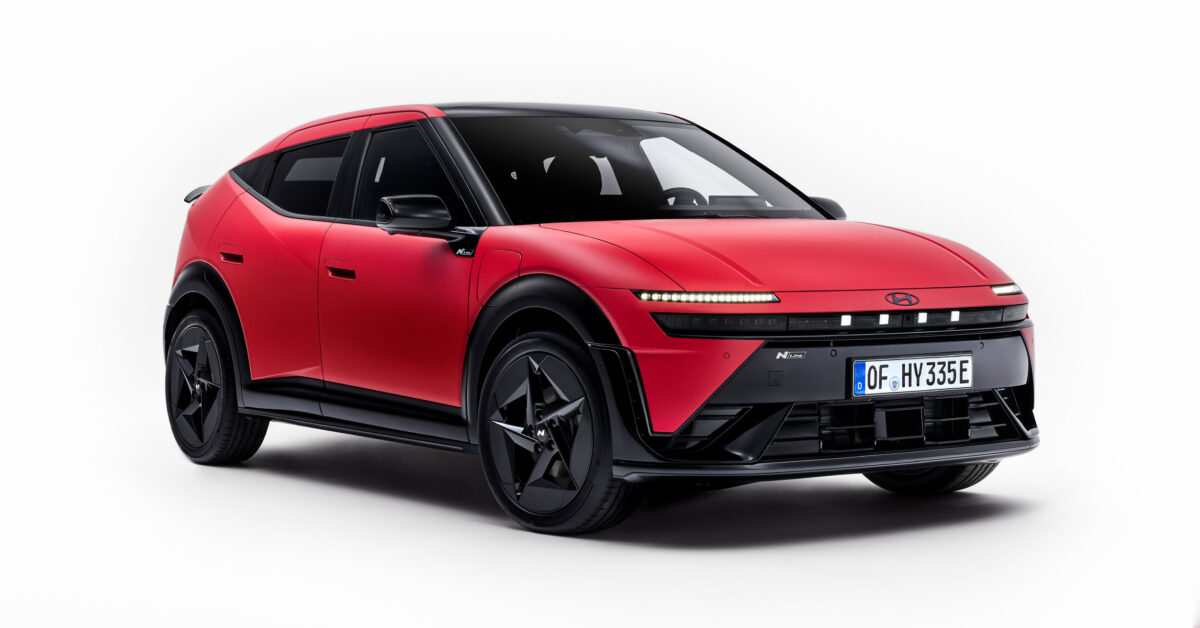
Hyundai has expanded its electric line-up with the introduction of the Ioniq 3, a new compact hatchback that is likely to arrive in UK showrooms in late 2026 or early 2027.
Positioned above the compact Inster city car and below the larger Ioniq 5 hatchback and Ioniq 6 saloon in Hyundai’s all-electric line-up, the Ioniq 3 is set to challenge the sales of the similarly-sized MG 4 and Volkswagen ID.3.
Unlike the Ioniq 5 and 6, which use Hyundai’s 800V architecture for ultra-fast charging, the Ioniq 3 uses a simpler 400V system. This helps reduce costs but means slightly slower rapid charging speeds.
Bodystyle
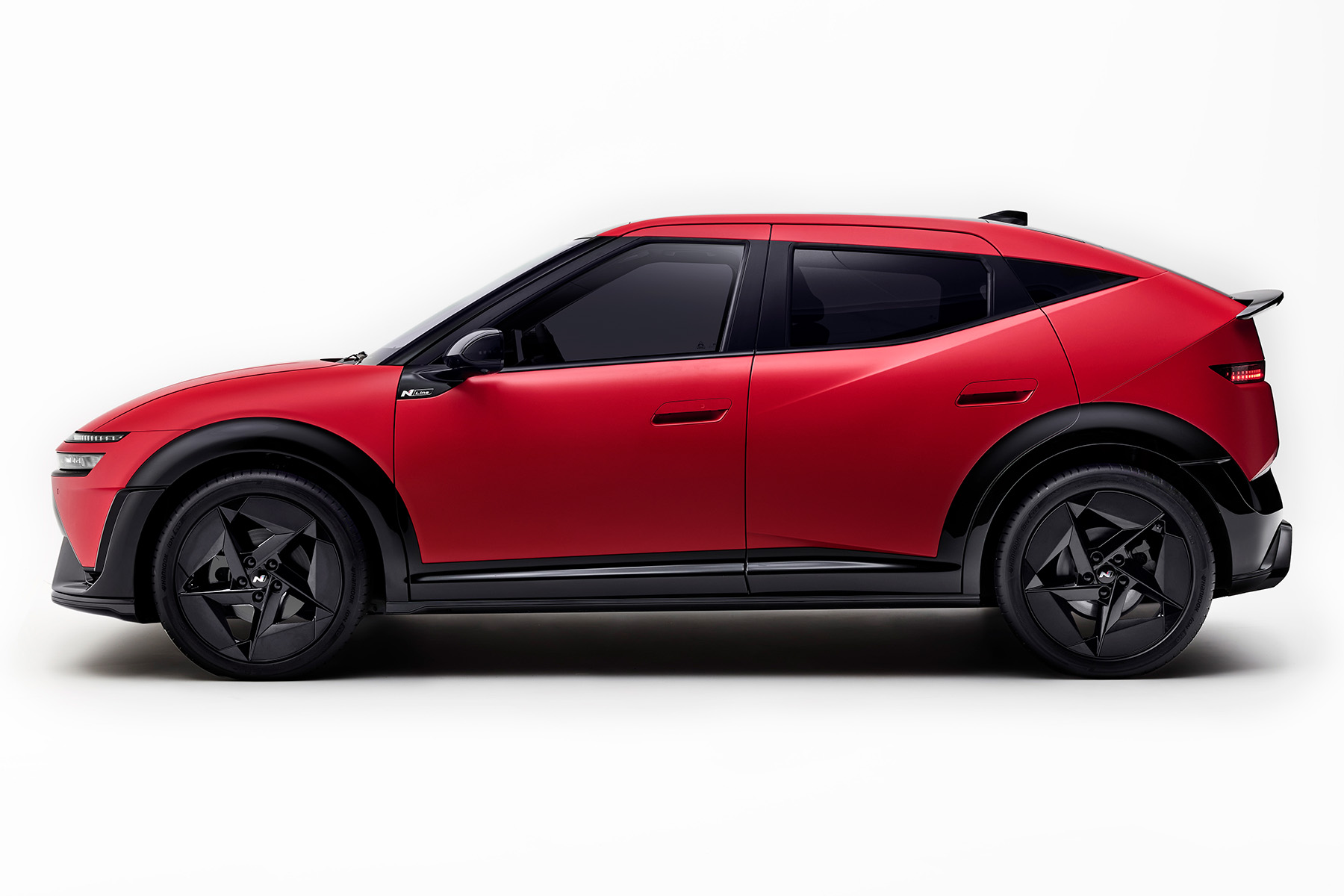
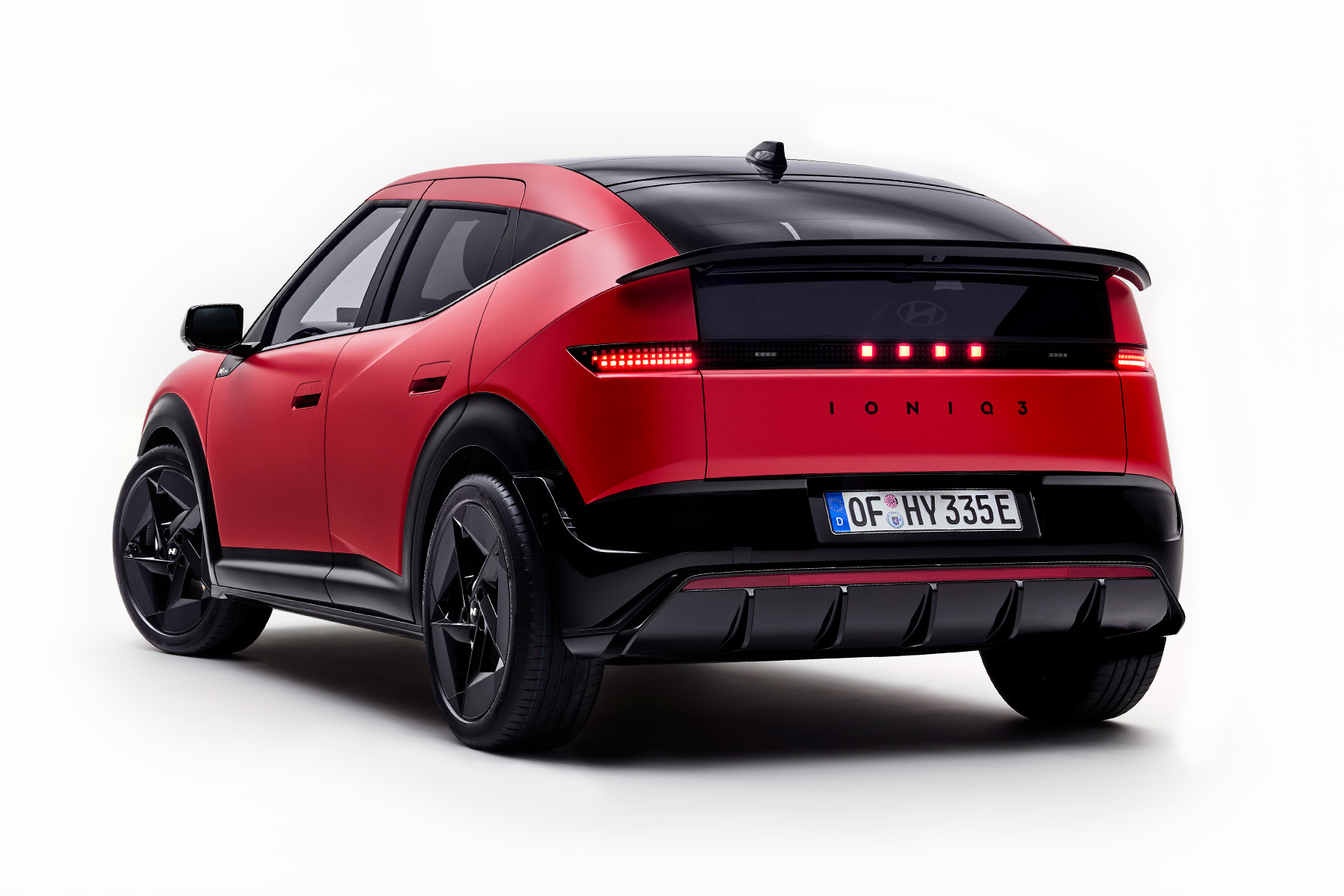
Unlike the larger Ioniq 5 hatch or the more aerodynamic Ioniq 6 saloon, the Ioniq 3 adopts what Hyundai calls an ‘Aero Hatch’ design. In simple terms, it’s a compact hatchback shape that prioritises interior space and efficiency rather than outright styling flair.
The low front end and extended roofline are designed to improve aerodynamics, with a quoted drag coefficient of 0.263. That makes it more aerodynamic than most small hatchbacks – a low drag coefficient providing a slight boost to electrical efficiency.
A flat-floor layout – made possible by its dedicated EV platform – allows for a more open interior, with enough rear space to accommodate three adults. Boot capacity is quoted at 441 litres, which would put it towards the top end of the compact EV class.
Battery, range and charging
The Ioniq 3 will be offered with two battery options:
- ‘Standard range‘ – 42kWh battery with around 214 miles on a single charge
- ‘Long range‘ – 61kWh battery with around 308 miles on a single charge
That places it broadly in line with rivals such as the Kia EV4 and MG4 ‘Long Range’, while sitting below the larger Ioniq 5, which can exceed 300 miles without re-charging.
Power output for the ‘Standard Range’ model is 147hp. The ‘Long Range’ will presumably have a slightly lower power output – that being the trade-off for the longer battery range. Hyundai is yet to announce how fast the hatchback can accelerate, but we expect that the EV will be able to complete a 0-62mph in around nine or ten seconds.
Charging is supported by a 400-volt electrical system. Hyundai quotes a 10% to 80% rapid charge time of around 29 minutes under ideal conditions, along with AC charging of up to 22kW – higher than many rivals, which typically max out at 11kW.
The car also supports vehicle-to-load (V2L) functionality, allowing it to power external devices, a feature already seen on other Hyundai and Kia EVs.
Interior and technology
Inside, the Ioniq 3 follows the same general layout as other Hyundai EVs but in a simplified form. A large central touchscreen (up to 15 inches) runs Hyundai’s new ‘Pleos Connect’ system, based on Android Automotive.
Other features include:
- Digital key access via smartphone
- Built-in navigation with charging route planning
- Over-the-air software updates
- Optional premium audio and ambient lighting
Driver assistance systems are also carried over from larger Hyundai models, including ‘Highway Driving Assist 2’, a 360-degree camera system and remote parking functions.
When is it arriving?
Hyundai has not yet confirmed UK pricing or a precise on-sale date, but the Ioniq 3 has been unveiled as a European-focused model, with production taking place in Turkey. Further details, including specifications and pricing, are expected closer to launch.