On a hot day, getting into your car can feel like stepping into a sauna. What usually follows is a scramble to put your keys in the ignition so you can get the air conditioning (AC) running to make the heat more manageable.
Most of us immediately turn the air conditioning dial into the blue zone and crank the fan speed up to max, overlooking an important feature on the dashboard – the air-recirculation button.
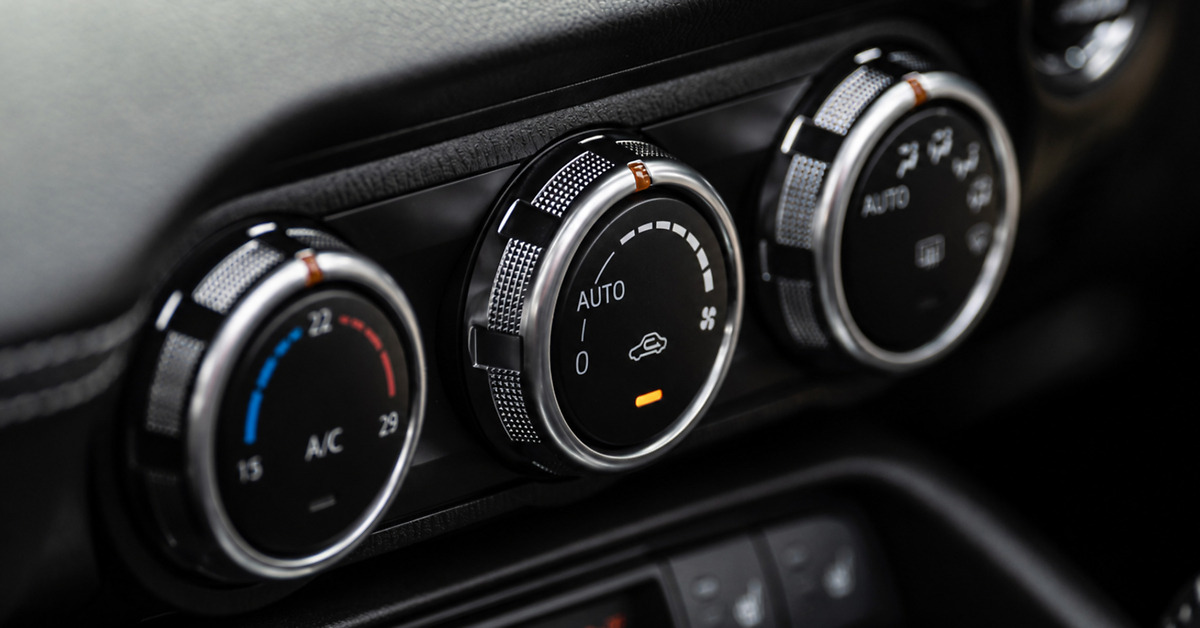
This button, usually in the form of a car silhouette with a U-turn arrow in the middle, is one of the most misunderstood controls in your car. Used at the right time it can cool the cabin faster, keep out traffic fumes and reduce the workload on your air conditioning system. Leave it switched on for too long, however, and it can cause misted windows and stale air inside the cabin.
In this article, we will explain what the air-recirculation button does, when you should use it, and the potential drawbacks this feature can cause.
So, what does it do?
When you switch your car’s AC on, it sucks in air from the outside, passes it through the cooling system and ten pushes the cooler air into the cabin. The air-recirculation button stops this intake from the outside and instead starts sucking air from within the car to be cooled and then pushed back into the cabin, thus ‘recirculating’ the air around the cabin.
As the air-con system continually cools the same air over and over again, rather than pulling hot air in from the outside, the cabin will cool down faster. The longer your AC is running on recirculated mode, the cooler the inside of your car will get.
The air-recirculation button is located within the rest of the AC controls. If your car is more modern, you may have to search for the air conditioning settings on the infotainment screen.
For those of us with automatic climate control, the car will already be trying to get the temperature down to your desired levels as soon as you put the keys in the ignition, but you’ll still usually have to activate the recirculation function manually. Some cars will revert to outside ‘fresh’ air after a period of time, so you may need to reactivate the recirculation function again to keep it going.
When should I use it?
This feature is perfect for heatwaves and hot days in general, as your car’s interior will cool down quicker than if you’re relying on cooling outside air.
It might seem common sense to keep the recirculation button on in the winter too, in an attempt to keep the interior toasty and not draw in frosty air from outside. In reality, it’s best to switch it off on cold days – the outside air will be forced through a heater anyway, so it will be sufficiently warm before it reaches you.
Air recirculation can be particularly useful in electric cars. Because heating and air conditioning draw power from the battery, cooling already chilled cabin air requires less energy than continually cooling hot outside air. The saving is modest, but can help improve efficiency on longer journeys.
Regardless of whether it is hot or cold however, you should not use the recirculation feature all the time, as we will explain…
What are the pros and cons?
Pros
- Cools the cabin faster
- Reduces outside pollution entering the cabin
- Helps keep pollen and dust out
- Reduces the workload on the air conditioning system
- Can marginally improve efficiency, particularly in very hot weather
Cons
- Windows can mist up in cold or wet weather
- Cabin air becomes stale if left on continuously
- Higher carbon dioxide levels can reduce alertness on long journeys, which is why fresh air is recommended periodically.
If you would prefer to keep the windows up on a hot day, pairing the AC and the air-recirculation feature is the most effective combination for cooling down the cabin and keeping it cool.
Pushing this button will also de-fog your windscreen faster in the heat, and not using it will put pressure on your AC system in a heatwave, as it has to work harder to continuously cool hot air from outside.
An AC under less strain essentially saves battery power, and can marginally reduce the fuel your car consumes on your journey as the AC doesn’t need as much assistance.
Additionally, as you are cutting off the air from outside, the recirculation button also stops pollen and gaseous pollutants from entering the car, as well as foul-smelling odours, which in turn keeps your AC system’s air filter cleaner for longer.
That said, leaving the air-con in recirculated mode all the time can have negative effects on your health and your ability to drive.
Recirculated air is essentially air that you and your passengers have already been breathing. Therefore leaving this feature on for extended periods of time saps the air of oxygen and fills it with carbon dioxide (CO2) second-hand moisture, which can make the driver groggy after a while.
This effect is amplified on road trips with every seat occupied, and can hinder your concentration. With four or five people breathing the same air over and over again, CO2 levels can increase quite quickly.
For this reason, it’s best to switch off the recirculation feature after half an hour or more, or open your side window a smidge to get some much needed fresh air. Some cars will automatically disable the recirculation function after a while (about 15 minutes or so) to ensure a plentiful supply of fresh air.
Frequently asked questions
Does using air recirculation save fuel?
Slightly. Because the air conditioning system is cooling air that’s already been chilled, it doesn’t have to work as hard. In petrol and diesel cars this may marginally reduce fuel consumption, while in electric cars it can slightly reduce energy use and help preserve driving range. The difference is usually small in everyday driving.
Does air recirculation help with hay fever?
Yes. Air recirculation reduces the amount of pollen entering the cabin by limiting the intake of outside air. However, it works best alongside a clean cabin pollen filter, which removes airborne allergens before they enter the vehicle. Replacing the filter at the recommended intervals can make a noticeable difference during hay fever season.
Does air recirculation block traffic fumes entering the car?
It helps reduce them, but it won’t block them completely. By limiting the amount of outside air entering the cabin, recirculation can reduce exposure to exhaust fumes, especially in heavy traffic, tunnels or behind smoky vehicles. Once you’re back in cleaner air, it’s a good idea to switch back to fresh air.
Why does my car switch air recirculation on/off automatically?
Many modern cars with automatic climate control manage the recirculation mode for you. The system monitors factors such as cabin temperature, humidity and, on some models, outside air quality. It will switch between recirculation and fresh air as needed to cool the cabin efficiently while helping to prevent the windows from misting up.
Why do my windows mist up when using air recirculation?
Air recirculation traps moisture inside the cabin. In cold or wet weather, this can cause the windows to fog up more quickly. If your windscreen starts to mist, switch back to fresh air and use the air conditioning to remove excess moisture. Many cars automatically disable recirculation when the windscreen demist setting is selected.
Read more:
This article was originally published in August 2022, and updated in July 2026.