Ask any UK person, not just motorists, to name a British car manufacturer and the first name that comes to mind will usually be Vauxhall.
The Vauxhall brand has been part of our daily lives for as long as anyone can remember, and in fact a lot longer – few realise that this is one of the oldest car makers of all and one of only a handful of names to survive from the dawn of motoring.
While for much of its life Vauxhall was owned by an American giant and is today owned by a French-Italian conglomerate, the company has remained steadfastly British in operation and outlook. And Vauxhall has always been a very high-profile maker, routinely battling over the top of the UK car sales charts with Ford.
During that time Vauxhall has been consistently derided in popular culture, particularly on the likes of the Top Gear TV show. It has primarily been accused of producing dull, unreliable products, but has continued to sell cars in their thousands to keen buyers.
Sales reps toiling up motorways, young drivers taking their first steps on the roads, or parents taking their family on weekend outings, have inevitably been behind the wheel of a car wearing the Griffin badge of Vauxhall.
So who or what is Vauxhall?
Vauxhall is one of the oldest car manufacturers still in existence but the company’s history pre-dates the car by some four decades. Vauxhall Iron Works was founded in 1857 to make pumps and engines for ships, the name coming from its location – Vauxhall, in south London.
The firm moved to Luton in 1905, two years after it had built its first cars. It would remain at Luton for 117 years until finally moving its headquarters to Coventry is 2022 to join the rest of the Stellantis family here in the UK – in March 2025 the last Vauxhall vehicle to be built in Luton, a Vivaro van, rolled off the production line.
Vauxhall didn’t make a lot of money in its early days and, after the first world war, started looking for a partner. American giant General Motors (GM) acquired the company in 1925 and set about updating some of Vauxhall’s antiquated vehicles, bringing numerous innovations to the UK car market.
GM also bought German car company Opel in 1929 and, in 1931, Vauxhall started marketing trucks under the name Bedford, which were based on GM’s Chevrolet trucks from America.
The Vauxhall Victor small car launched in 1957 and quickly became the most exported model from Britain, despite its styling being derided by UK critics as “too American”. It was joined in 1963 by the smaller Vauxhall Viva, targeting the Ford Anglia, and a year later Vauxhall started making cars at a second plant in Ellesmere Port on Merseyside.
In the 1970s, GM started to combine the activities of Vauxhall and Opel, with the two launching identical models with different names. The Vauxhall Chevette of 1975 was the same as the Opel Kadett, and the Vauxhall Cavalier was sold in Europe as the Opel Ascona. This merging also led to Vauxhall effectively becoming little more than a British badge on German-developed cars. The final Victor of 1972 was also the last all-British Vauxhall, with every model that came after being mildly restyled versions of Opel cars.
In 1980, the ageing Viva was replaced by the all-new Vauxhall Astra. The larger Cavalier, launched a year later, became one of Vauxhall’s most successful models, before finally being replaced by the Vectra in 1996 – this, too, sold in big numbers despite a survey by the BBC’s Top Gear dubbing it “the least satisfying car to own in Britain”. And the Nova small car made way for today’s Corsa.


For many years, Vauxhall had been a perennial number two in vehicle sales to Ford here in the UK. But by the end of the 1990s, Vauxhall had closed the gap in the sales charts to its big rival.
In 2002, car production ended at Luton as the plant was turned over to making vans. Ellesmere Port was under threat, too, when GM filed for bankruptcy in the US in 2009 and tried to spin off Vauxhall and Opel into a separate company, which was almost sold to Canadian giant Magna. But GM ultimately held on to its European assets and, in fact, Astra production was moved from Europe to be concentrated at Ellesmere Port.
GM finally let go of its European brands in 2015, when Vauxhall and Opel were acquired by Peugeot and Citroën owner PSA Group. In 2021, PSA merged with Fiat Chrysler Automobiles and Vauxhall became one of the eight mainstream brands in the giant that is the Stellantis Group.
Vauxhall appears to be doing reasonably well under the Stellantis umbrella – having seen a consistent decline in sales since the Covid pandemic and now facing a growing threat from new-to-the-UK Chinese brands, one of the oldest of them all managed to grow its output in 2025, selling close to 82,000 cars to British buyers.
What models does Vauxhall have and what else is coming?
Vauxhall’s current range is underpinned by two model names that have lasted a very long time – the Corsa small car and Astra family hatch. Unlike their prime Ford rivals, both show no signs of disappearing any time soon, both today available in electric versions alongside their petrol counterparts.
The Corsa finally knocked Ford’s Fiesta off the top of the UK best-seller chart in 2021, leading to the demise of both the Fiesta and Astra-rivalling Ford Focus. Despite today’s new car sales chart being dominated by SUVs, the Corsa still holds firm as the third to fifth best-seller month after month.
The Astra was facelifted for 2026 and has received generally positive reviews, some saying it is now a true rival to the Volkswagen Golf. It comes in a wide range of power options, hybrid, plug-in hybrid and full electric and as either a hatchback or a ‘Sports Tourer’ estate car.
Vauxhall’s larger cars have passed into history, replaced by SUVs. The Crossland arrived in 2017 along with a larger sister, the Grandland, both the first Vauxhall products to benefit from the merger with PSA Group, being effectively the Peugeot 2008 and 3008 with different badges, and the Grandland has since become one of Vauxhall’s best sellers.
The Crossland is no longer with us, replaced in 2024 by a new model with an old name – the Frontera was Vauxhall’s first SUV sold between 1991 and 2004. The new one is very different, pitched as a family vehicle with either mild hybrid or electric drivetrains, and sitting in the middle of the range below the Grandland and above the Mokka.
The Mokka arrived in 2021, replacing the previous Mokka X, and spawned the brand’s first mainstream electric SUV – today both versions are available but the diesel-engined option has been dropped.
Vauxhall’s only currently available people carrier is the Combo Life Electric, which is based on the Combo van and also sold in almost-identical forms as the Citroën ë-Berlingo and Peugeot e-Rifter. All these are electric-powered, available with five or seven seats, and are built here in the UK in Ellesmere Port.
Current Vauxhall range on our Expert Rating Index
In terms of what’s coming next the first newcomers will not be different models but the continuing revival of a badge – the GSE performance sub-brand is relaunching. There is already a Mokka GSE available and it’s being joined in 2026 by the Corsa GSE – an Astra GSE appears a certainty with rumours suggesting it will be an electric car with close to 300hp to take on the likes of the Cupra Born.
There’s little indication as to what new models are on the way from Vauxhall but we expect a replacement for the Corsa in 2028, with indications that it will only be available as an affordable EV. But if the current slowing of the switch to electric continues, the current petrol-engined Corsa could continue to be sold alongside the new electric version.
Industry sources have also suggested that the brand has been working for some time on a replacement for its Insignia large car, last sold in 2024. If it comes to fruition the new model is likely to be an EV with more SUV-focused styling.
Where can I try a Vauxhall car?
You won’t need to travel too far to find a Vauxhall dealer, but maybe a bit further than a few years ago.
The brand was once one of the most prolific on the UK market, with well over 300 dealerships across the country. But Stellantis has significantly cut back on numbers in recent times, slashing 58 dealers in 2021 alone. However, there are still more than 200 outlets across the UK in which to check out the Vauxhall range.
What makes Vauxhall different to the rest?
Vauxhall’s success remains firmly built on familiarity – it’s been one of the most prolific and easily recognised names on the UK car market for almost as long as the car has existed – and the fact that the manufacturer truly is, and always has been British, unlike its long-time bitter rival Ford, which many think of as a British company but is of course American.
Vauxhall for much of its life has been owned by Americans and today is part of a French-Italian multinational group headquartered in Amsterdam, Holland – but it remains the only British volume car brand still in existence.
A Vauxhall fact to impress your friends
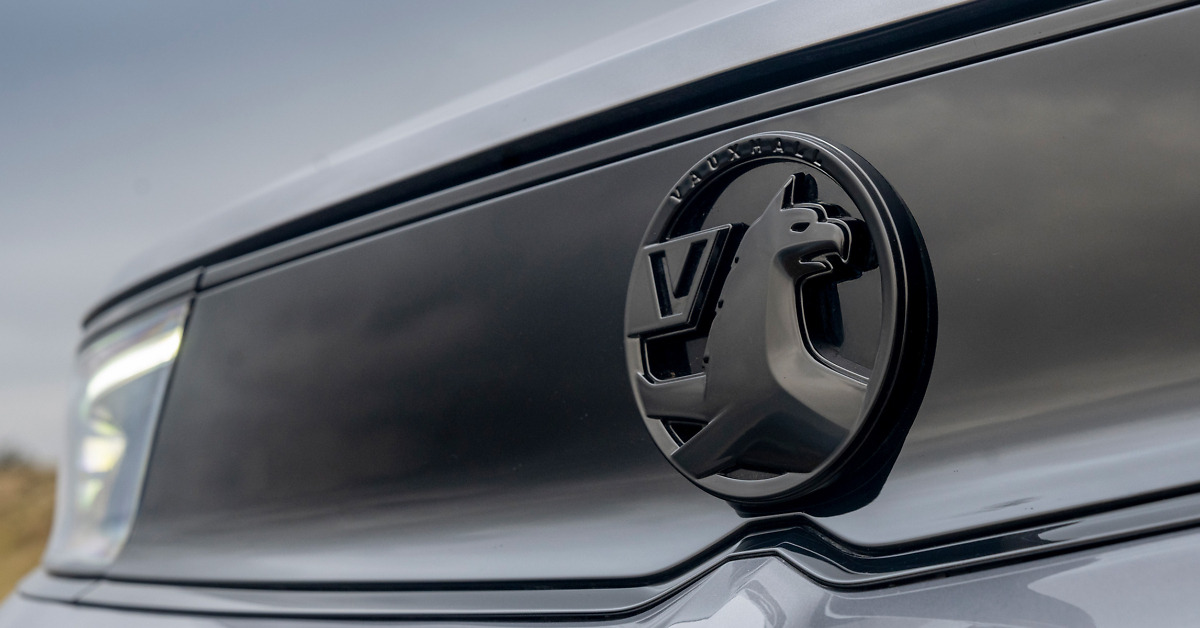
Vauxhall’s familiar Griffin logo dates back as far as the 13th century. It was derived from the coat of arms of Faulkes de Breaute, a mercenary soldier who fought for King John and was given the Manor of Luton as a result. He was also given property south of the River Thames in London and ‘Fauk’s Hall’ became Vauxhall – so Vauxhall and Luton were connected long before the car maker came into being.
The original logo adopted by the Vauxhall Iron Works was mounted on a square surround. It was eventually changed to a circular one as Opel had a round badge and so only one bonnet mount had to be made to fit the badges in…

Summary
It has long been fashionable to take a dig at Vauxhall but even when such criticism had some merit in the final years of the 20th century the firm continued to sell a lot of cars.
Today, Vauxhall is a far more efficient manufacturer and still competing at the top of the sales charts – one that may not write many headlines for distinctive or different products but one which continues to sell a lot of cars to a lot of generally happy customers.
This feature was first published in June 2024 and updated in June 2026.
Buy a Vauxhall
If you’re looking to buy a new or used Vauxhall, The Car Expert’s partners can help you find the right car.
Lease a Vauxhall
If you’re looking to lease a new Vauxhall, The Car Expert’s partners can help you find a competitive deal.

Personal contract hire deals from Carparison Leasing. Find out more

Personal contract hire deals from Rivervale Leasing. Find out more