You’ve prepared your car, written a strong advert and set a realistic price. Now it’s time to turn interest into a successful sale — while avoiding common pitfalls and scams.
Respond promptly to enquiries while your advert is live. Buyers often contact several sellers at once, so quick, helpful replies can make the difference between selling your car and losing out.
If you’re using an auction platform like eBay, be available as the listing ends to handle last-minute questions. Be open, polite and professional — treating the process like customer service will help build trust and give you a better sense of who you’re dealing with.
Arranging a viewing
Most buyers will want to see the car in person and take it for a test drive — this is entirely normal. Be cautious of anyone willing to buy immediately without viewing, as this can be a red flag.
Before arranging a meeting:
- Get the buyer’s contact details (at least a mobile number)
- Confirm they can legally drive the car
For a test drive, the buyer must:
- Bring a valid driving licence
- Provide proof they’re insured to drive your car (often included in comprehensive policies)
If they’re not covered, they can arrange short-term insurance — many providers offer hourly cover specifically for test drives.
Safety tips:
- Always meet at your home, not a location suggested by the buyer
- Have a friend or family member present if possible
- Keep control of the situation at all times
Our Expert Partner Auto Trader produces a free safety checklist which is available to all visitors to its site.
Make sure all the paperwork is at hand to view; the crucial bit of paper is the logbook, called the V5C, which proves you are the owner. This should be two sheets of A4 folded, with none of the tear-off sections missing. Showing a paper MOT certificate no longer applies as they went online from January 2021. Also find any paper service records and bills.
The inspection and test drive
Before any viewing, make sure your car is presentable and ready:
- Clean it inside and out
- Remove personal belongings
- Check tyres, lights and fluid levels
Make sure the car starts without issue. If it hasn’t been used regularly, check the battery.
Fuel or charge:
- Petrol/diesel: enough fuel for a test drive
- Electric: ideally fully charged so buyers can see the range
Buyers may bring someone with them — this is common and not a concern in itself.
During the test drive:
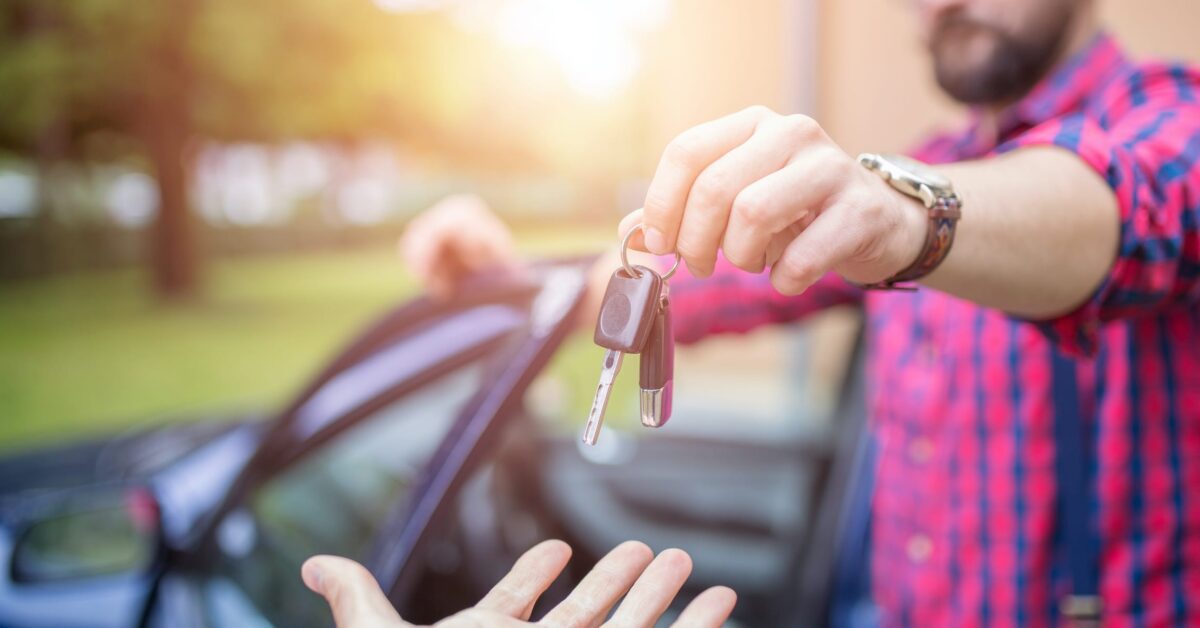
- Always check insurance before handing over the keys
- Always accompany the driver
- Never leave the buyer alone with the car
In a private sale (as opposed to a dealer), a test drive isn’t a case of ‘see if you like it’ but more to check for any faults.
In all cases, never leave a potential buyer alone with the vehicle or give them the keys. If you have a keyless fob, keep hold of it at all times, even on a test drive.
Negotiating and agreeing a sale
Most buyers will expect to negotiate, so decide in advance the lowest price you’re willing to accept.
The best way to avoid disputes is transparency:
- Be honest about any faults in your advert
- Include clear, detailed photos (inside and out)
As we explained in this earlier feature, the more photos in your advert the better. Auto Trader allows up to 100 photos in all its price packages – you definitely don’t want that many, but make sure you cover all of the key aspects both inside and outside the car.
If you’re not comfortable with an offer or the buyer, you can walk away. There’s no obligation to sell unless payment has been made — especially with classified ads.
For auction platforms like eBay, rules may differ — once a sale is agreed, you may be committed, so always use the platform’s payment system for protection.
Payment
The safest and simplest payment method is a bank transfer.
- Use Faster Payments where possible (usually instant or within a few hours)
- Only share your account name, sort code and account number
- Never share your PIN or banking login details
Do not release the car until the money is fully cleared in your account.
Be cautious with:
- Cheques or banker’s drafts (can be cancelled or fraudulent)
- Buyers who rush or pressure you to hand over the car early
We generally advise against accepting large cash payments:
- Risk of counterfeit notes
- Personal safety concerns
- Difficulty proving legitimacy
If you do accept cash:
- Complete the transaction at your bank
- Have staff verify and deposit the money immediately
Common scams to watch out for
Most private sales are straightforward, but scams do happen. Be alert to these common tactics:
“Vehicle matching” scam
A fraudster claims they already have a buyer and asks for an upfront fee to arrange the sale. The sale never happens, and your fee is lost.
Overpayment scam
A buyer sends more money than agreed and asks you to refund the difference. The original payment later turns out to be fraudulent, leaving you out of pocket.
Distraction tactics
Two people attend a viewing — one distracts you while the other tampers with the car (for example, the “dirty oil” trick to fake engine problems).
General warning signs
- Buyer refuses to view the car
- Overly eager to pay immediately
- Requests unusual payment methods
- Asks for personal or financial information
Remember:
- Only deal directly with the buyer
- Never release the car or documents before payment clears
- Don’t allow anyone to photograph sensitive paperwork
Collection day
Once payment has cleared, then you can hand over the car to the buyer. Find the second set of keys if applicable, charging cable for an EV, owner’s handbook and locking wheel nut key there is one.
Cut out the blank green part 6 ‘new keeper’ slip from the logbook (V5C) to give to the buyer and you keep the rest. Selling to a private person, you then fill in the green part 2 for which you need their full name and address, and you send it off.
You can also tell the DVLA online when you no longer own a vehicle, or when you buy a vehicle as its registered keeper. When a car transfers ownership sold, you can cancel your tax and get a refund for any whole unused months and the new owner taxes the car afresh.
Not sure it’s worth the hassle?
Many private car sales take place every day where everybody ends up happy, but if having read this you decide that maybe it’s not for you this time round, you’re certainly not alone.
Selling privately can get you a better price, but it does take time and effort — and not everyone wants the inconvenience.
That’s why many sellers choose car buying services instead. They’re quicker and easier, although you’ll usually receive a slightly lower price.
It’s always worth getting a quote — you might be surprised at the offer.
Read more:
This article was originally published in June 2023, and was updated in April 2026. Further reporting by Sean Rees.