Make and model: Kia K4
Description: Mid-sized family car
Price range: £21,845 to £36,865
Summary: In the K4, Kia has produced a family car that in practicality, comfort and general value continues the strong legacy of its Ceed predecessor.
Introduction
Having launched a range of electric vehicles in recent times, Kia has now returned to one of its most successful traditionally powered market segments with a replacement for the Ceed.
The K4 will sit alongside the EV4 to give buyers a choice of petrol or electric power, and will no doubt appeal to those who simply don’t want to follow the crowd and drive an SUV.
The hatch version of the K4 is arriving now, with an estate sister to follow before the end of 2026. We’re unlikely to see the saloon version that’s sold in other markets. Meanwhile, the Xceed crossover will continue to be sold as the sole remaining member of the Ceed line.
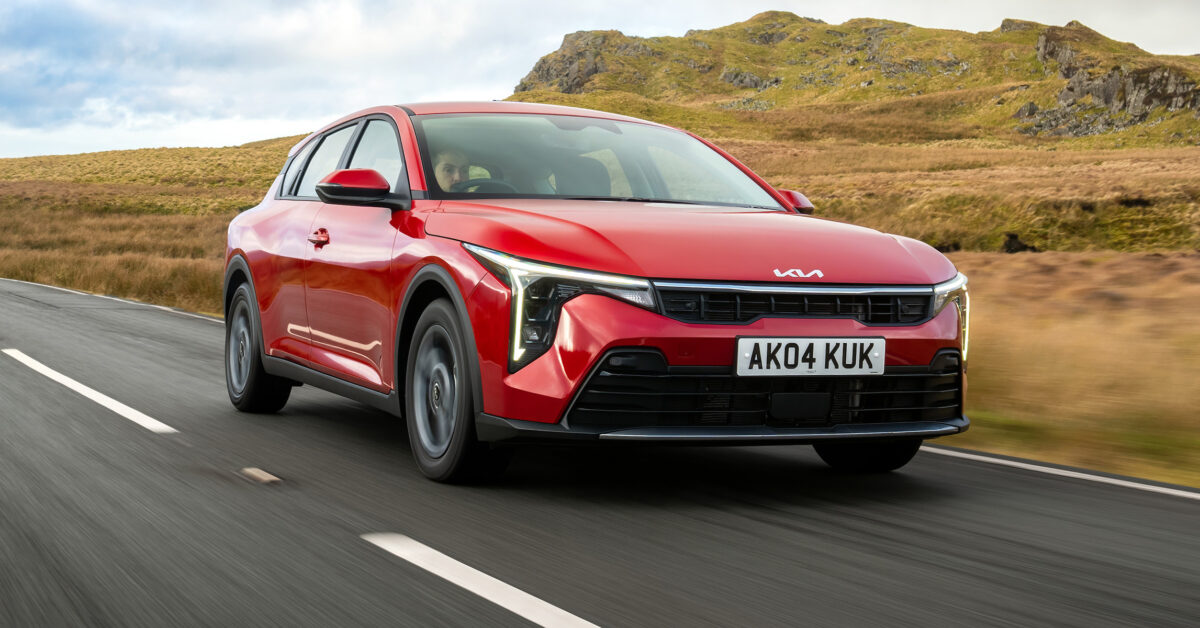
The K4 makes an immediate impression with sharp styling, and while one of the larger cars in its class, it has a low stance that aids the visual appearance.
For a broader ownership picture, see our full Kia K4 Expert Rating.
Price and equipment
The K4 is offered with three petrol engine choices and Kia’s standard three trim levels dubbed Pure, GT-Line and GT-Line S. The 1.0-litre 115hp powerplant is available across all three trim levels and the only engine with the choice of six-speed manual or seven-speed auto gearboxes, though only Pure buyers can choose to go manual.
GT-Line buyers can choose a 1.6-litre engine with 150hp, with a significantly better 0-62mph time but at a cost of 6mpg in fuel economy, rated just shy of 44 mpg. On top-spec GT-Line S cars, the 1.6-litre engine has power bumped up to 180hp, with an 8.4-second 0-62mph time and fuel economy of 42 mpg.
Currently, only the 1.0-litre engine comes with mild hybrid assistance – regular hybrids are on the way, but there’s no indication yet as to whether the K4 will get a plug-in hybrid variant.
K4 prices start at a competitive £26K for the manual Pure, with an automatic gearbox adding an extra £1,500. The only real extra-cost option is the paint, with ‘Premium finishes’ adding £620. Standard equipment across the line-up includes such niceties as a three-screen dashboard layout with a 12-inch driver’s display and a central touchscreen, wireless smartphone connection, multiple USB-C ports in both the front and rear, automatic climate control, and a rear camera and parking sensors.
GT-Line variants cost £30K with the 1.0-litre engine and just over £31K with the 1.6-litre version. Additions include an increase in alloy wheel size from 16 to 17 inches, several styling tweaks, artificial leather upholstery, and heated front seats with the driver’s being electrically adjustable.
You’ll pay £34K for the top-level GT-Line S in 1.0-litre form, and just under £37K for the 180hp 1.6-litre variant. The extras include a tilt/slide sunroof, more stylish upholstery, vented front seats plus heating on the rears and the steering wheel, an eight-speaker upmarket sound system and wireless phone charging.
All of the usual electronic driver aids come as standard, though Pure grade cars do without an extra blind spot collision avoidance system (a camera view on the driver’s display) and the GT-Line S gets an extra forward collision avoidance system – as of March 2026, the Kia K4 is yet to be crash tested by Euro NCAP under new stricter protocols introduced this year.
Finally, all versions come with Kia’s still industry-topping seven-year/100,000-mile warranty with service intervals of one year/10,000 miles.


Inside the car
On getting into the K4, it scores even before considering the interior layout – it is bigger than both its Ceed predecessor, and the EV4, and so is roomy, especially in the rear seats, often a pinch point in this market. The boot space is excellent too, at least in the larger-engined models at 438 litres (rising to 1,217 with the rear seats folded). The mild hybrid drivetrain eats up some 110 litres.
The dash layout will be familiar to anyone who has checked out a recent Kia, with two 12-inch touchscreens in a large panel and separated by a third screen for the climate control. Thankfully, there are also proper buttons for the climate functions, as the screen sits rather awkwardly behind the steering wheel rim.
The central touchscreen displays all of the efficiency one has got used to in recent Kia models and such prowess is matched by the general fit and finish – there is still a fair amount of black plastic, but it’s all bolted together to a reasonable level of quality.
One oddity is the drive selector on the auto versions – it sits in the same position as the gear lever on manual models, but its huge proportions suddenly seem so last-generation in an era of using delicate stalks to select go.


On the road
The Car Expert’s initial test drives were in cars with the 1.0-litre powerplant – we will be conducting a review of the larger engines later. On paper, it appeals with official fuel economy not far shy of 50mpg and competitive emissions.
Taking 12 seconds to pass 60mph is, however, quite slow in today’s market, and the engine does not feel particularly eager even with a lot of revs. However, in general use, and especially negotiating busy urban roads, it’s reasonably refined.
We tried cars with both the six-speed manual gearbox and the seven-speed auto – the latter is fast becoming the norm in today’s world as doing your own gear shifting becomes a dying art, but the auto did disappoint, feeling indecisive, slow to react when accelerating away from a standstill.
In terms of its general road manners, the Kia comes up to the mark. It rides generally in comfort, with only the poorest road surfaces unsettling it. In corners the steering is highly precise, the car being as enjoyable to drive as it is practical.
Of course, you have to put up with the various driver alerts that are a feature of today’s cars, particularly the lane departure warning, but thankfully, this can easily be cancelled on the steering wheel without resorting to the touchscreen.


Verdict
Kia’s designers faced a big task replicating the success of the Ceed, and on the early evidence, they’ve met the brief. The K4 is a good-looking car, but more importantly, it ticks all of the important boxes for family transport – it’s well-built, comfortable, with loads of room and lots of equipment at a competitive price. It should do well.
We like:
• Good value pricing
• Lots of room in back
• General fit and finish
• Sharp steering
We don’t like:
• Slow 1.0-litre engine
• Indecisive auto gearbox
• Hybrids not here yet, no news on plug-in hybrids
• Mild hybrid cuts size of boot
Similar cars
Cupra Leon | Honda Civic | Hyundai i30 | Mazda 3 | Peugeot 308 | SEAT Leon | Skoda Octavia | Toyota Corolla | Vauxhall Astra | Volkswagen Golf
Key specifications
Models tested: Kia K4 Pure
Price as tested: £26,665
Powertrain: 1.0-litre petrol
Gearbox: Six-speed manual
Power: 115 hp
Torque: 200 Nm
Top speed: 115 mph
0-62mph: 12.2 seconds
Fuel economy: 49.6 mpg
CO2 emissions: 129 g/km
Euro NCAP safety rating: Not yet tested (March 2026)
TCE Expert rating: Not yet rated (March 2026)