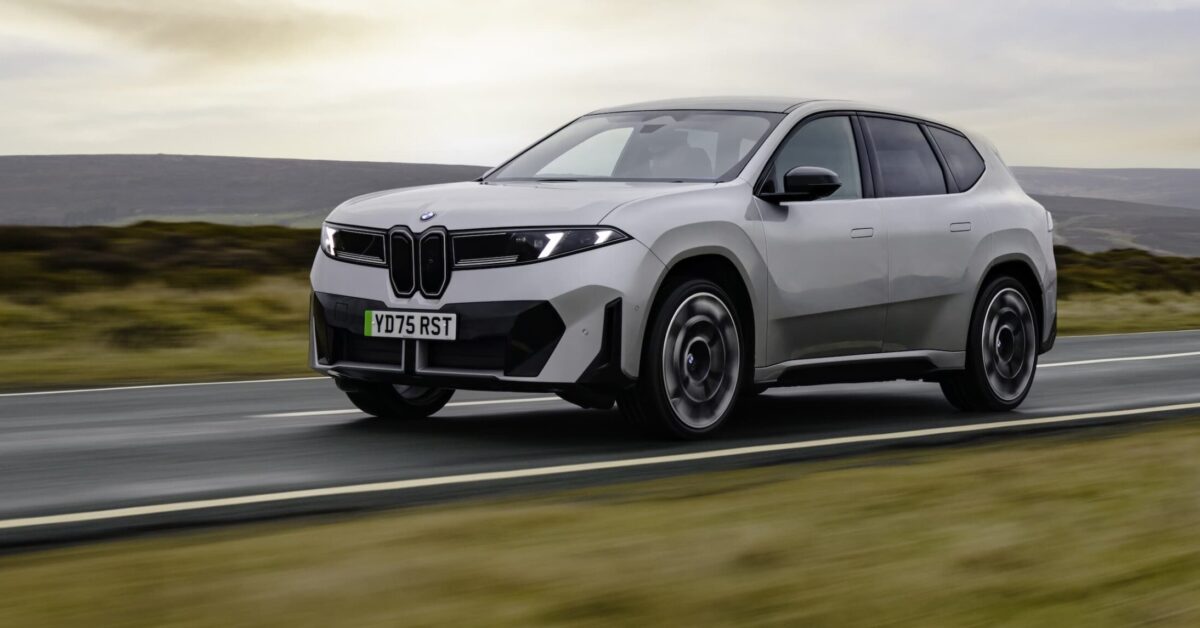
Make and model: BMW iX3 50 xDrive
Description: Mid-size electric SUV
Price range: from £58,755
Summary: The new BMW iX3 is the first car from BMW’s ambitious Neue Klasse programme – and after driving it, we think it might be the best electric SUV money can buy.
Introduction
The new BMW iX3 is more than just another new electric SUV – it’s the starting point for an entirely new generation of BMWs, and the first of some 40 new or updated models that will be launched over the next two years.
BMW has staked its immediate future on what it calls the Neue Klasse – German for “new class” – and the iX3 is the first car to come from this programme. The name is borrowed from a range of small saloons BMW made in the 1960s that were so influential they shaped everything the company built for the next 40 years. BMW is making the same claim for this generation: that everything changes now.
After spending a few hours behind the wheel of the new iX3, it’s a claim that’s hard to argue with.
It’s a mid-sized electric SUV, available in three trim levels starting from just under £59K. The car I drove was the M Sport trim, which BMW expects to be the most popular version. With some options added, the price tag came to around £65K.
For a broader ownership picture, see our full BMW iX3 Expert Rating.
Price and equipment
£60K-£65K is a lot of money for any car. At that price, there are electric SUVs – particularly from Chinese brands – that will hand you a longer features list for considerably less. That’s a fair point, and if maximising equipment-per-pound is your priority, there are better ways to spend £60K.
But the BMW doesn’t feel like a car where you’re paying extra for a badge. It feels like a car where you’re paying extra for quality, and the difference is apparent from the moment you sit in it.
The entry-level model has most of the stuff you’ll really want, like heated and electrically adjustable front seats, wireless phone charging and a comprehensive package of safety technology. The mid-range M Sport adds sportier styling, upgraded seat materials and additional ambient interior lighting. The top-spec M Sport Pro goes further with better seats, more striking exterior details and upgraded headlights.
The car I drove had a few extras, including a Harman Kardon stereo, a head-up display and three-zone climate control, bringing the total to around £65K.


Inside the car
This is where BMW has done something genuinely clever with what it calls ‘Panoramic iDrive’. Across the full width of the windscreen – from one side to the other – there’s a strip of information projected directly under your line of sight as you drive. Speed, battery level and directions sit in front of the driver. The rest of the strip is yours to set up from a selection of information: the weather, your music, navigation instructions, a phone call in progress. You can glance at it without taking your eyes a long way off the road, because it’s right there in front of you rather than on a screen further down the dashboard.
It sounds like a gimmick, but it isn’t. Within ten minutes of driving, you wonder why no one did it sooner.
The steering wheel looks odd at first – four spokes rather than the usual three, with a slightly unusual shape. On a conventional car this would block the instrument dials. It doesn’t matter here, because the driver information is at the base of the windscreen rather than behind the wheel. And it’s genuinely comfortable to hold, which is more than I can say for most BMW steering wheels I’ve driven over the years.
Physical buttons are few, but the important ones are real buttons – parking brake, hazard lights, volume, rear window heating – rather than touchscreen menus. The rest runs through a central screen, with software that’s one of the easiest to navigate through of any new car.
The seats and surfaces throughout the cabin use recycled materials – including textiles made from used plastic bottles and aluminium salvaged from elsewhere in the manufacturing process. Around a third of the car is built from materials that have been used before in some form. BMW has also managed to reduce the length of wiring running through the car by the equivalent of six football pitches, by better integrating its various computer systems. That kind of detail doesn’t show up on a spec sheet, but it reflects genuine engineering effort.
Rear passenger space is good. Two adults will sit comfortably with plenty of legroom and headroom. The floor between the seats is quite deep, which sounds trivial but makes a noticeable difference to how spacious the back feels – some electric cars have a raised floor due to the battery underneath, which can leave rear passengers feeling slightly cramped. The boot is a decent size and shape, and there’s a useful storage compartment under the front bonnet – ideal for keeping charging cables out of the main boot. The car can also tow a caravan or trailer, which many electric cars cannot.


Driving range and charging
BMW claims up to 500 miles from a full charge, which puts the iX3 ahead of most rivals on paper – although the new Mercedes-Benz GLC EQ and Volvo EX60 will offer similar range later this year. Real-world range will always be less than the official number, and will vary with speed, weather and driving style – but a battery this size means running low on charge should be an unusual event rather than a daily concern.
More impressive is how quickly it recharges. At a 400kW public charger, the iX3 can recover around 230 miles of range in about ten minutes. These chargers are currently rare in the UK, but will be more common in the next few years as EV charging infrastructure continues to roll out. It’s substantially faster than most electric cars currently manage, and it changes the calculus of a long motorway journey in a meaningful way. Stopping for ten minutes rather than 30-45 minutes is a different kind of inconvenience.
The charging socket is at the right rear of the car, in the same place you’d find a fuel cap on a regular BMW. It’s an intuitive position, and it works best if you reverse into parking spaces rather than pulling in nose-first.
On the road
This is the best electric SUV I’ve driven to date. The steering is direct and well judged, and is better than the significantly more expensive BMW iX. The suspension handles poor road surfaces well without making the car feel harsh, and on motorways you could genuinely cover hundreds of miles without fatigue. It’s quiet and well-composed, and the now-compulsory electronic nanny systems are much less intrusive than on most new cars.
The power is more than adequate. Getting to 62mph takes under five seconds, and the performance is smooth rather than aggressive. Day-to-day, it feels effortless.
The car includes a self-parking function that will reverse into a space on your behalf, and a remote function where you can stand outside the car and guide it into a tight gap using the key. There’s also a parallel parking function, although this feature was not cooperating on our car. If you like using these parking assistant functions, the iX3 is a bit snappier than most other cars, so you don’t feel like you’re endlessly waiting for the car to make up its mind and get on with it.


Verdict
The new BMW iX3 is the most complete electric SUV I’ve driven to date, and the price is the only real reservation. At £65K as tested, it’s a significant investment, but the quality does shine through.
Most aspects of the car are genuinely hard to fault. The interior technology is genuinely better than the class norm, especially the panoramic display. The driving experience is very good and better than anything else in a comparable price bracket, and the design is the most attractive BMW has produced in years. If the budget stretches, it’s worth it.
The only disappointment is BMW’s paltry three-year new car warranty, which doesn’t inspire confidence when a car is this loaded with so much new and unproven technology. Kia, Hyundai and several Chinese brands offer seven-year warranties, so there’s no excuse for BMW not to do better.
For a broader ownership picture, see our full BMW iX3 Expert Rating.
We like:
- The windscreen display is one of the most useful pieces of tech in any new car
- Steering and ride quality are genuinely better than the rest of the class
- 500-mile claimed range and very fast public charging as standard
- A cabin that feels premium without being ostentatious
- Significant environmental credentials backed by real engineering decisions
We don’t like:
- Pricing of £60-£65K is not cheap
- Three-year warranty is unimpressive for a car at this price
- Self-parking functions are clever but not entirely reliable
- Limited physical controls will frustrate some drivers
- It’s a heavy car – 2.4 tonnes – and that occasionally shows on twistier roads
Similar cars
Alpine A390 | Audi Q6 e-tron | BYD Sealion 7 | Changan Deepal S07 | Cupra Tavascan | Ford Mustang Mach-E | Genesis Electrified GV70 | Hyundai Ioniq 5 | Kia EV6 | Lexus RZ | Mercedes-Benz GLC EQ | Mini Countryman Electric | Nissan Ariya | Peugeot e-3008 | Polestar 3 | Porsche Macan Electric | Skoda Enyaq | Tesla Model Y | Volkswagen ID.4 | Volvo EX60
Key specifications
Model tested: BMW iX3 50 xDrive M Sport
Price as tested: £65,500
Engine: Single electric motor, all-wheel drive
Gearbox: Single-speed automatic
Power: 345 kW (469 hp)
Torque: 645 Nm
Top speed: 130 mph
0-60 mph: 4.9 seconds
Battery range: 192 miles
CO2 emissions: 0 g/km
Euro NCAP safety rating: Not yet tested (March 2026)
TCE Expert Rating: Not yet rated (March 2026)