Make and model: Alfa Romeo Junior Ibrida
Description: Small-medium petrol SUV with mild hybrid assistance
Price range: from £29,000
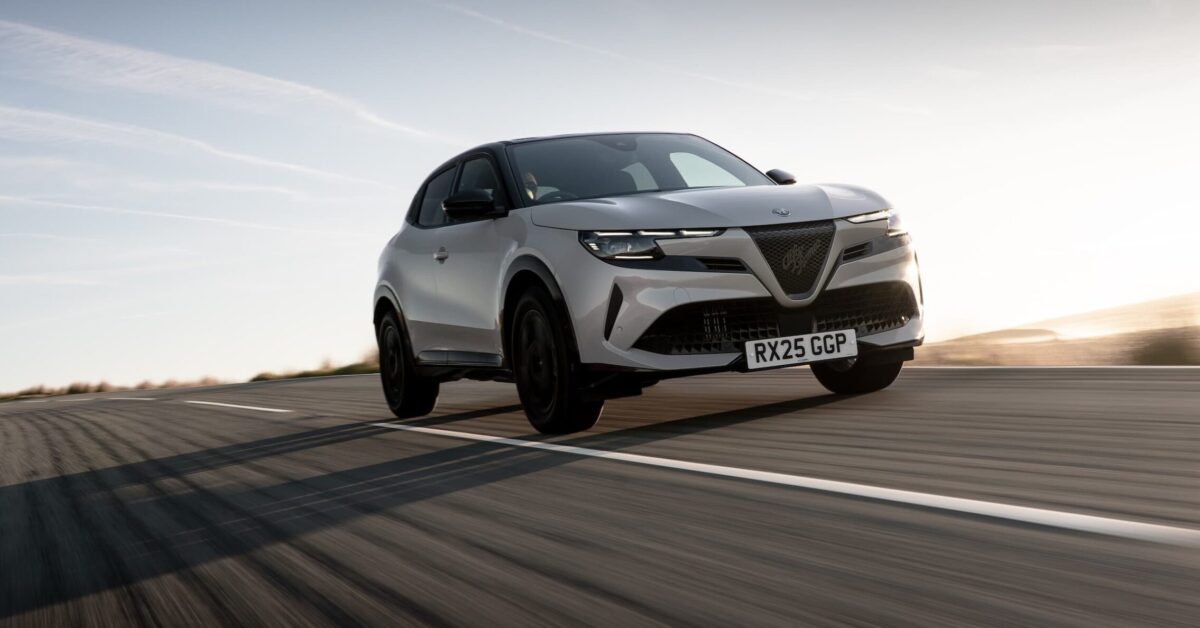
Summary: The Alfa Romeo Junior Ibrida looks distinctive and drives tidily, but the engine is disappointingly unrefined and it doesn’t fully deliver the character you might expect from the badge.
Introduction
The Alfa Romeo Junior Ibrida is the petrol-powered version of Alfa’s new small SUV. While the Junior Elettrica is fully electric, the Ibrida uses a 1.2-litre petrol engine with mild hybrid assistance. If you’re considering the electric version, see our full Alfa Romeo Junior Elettrica review and its Expert Rating, which combines safety, running costs, reliability and warranty data.
We tested the Junior Ibrida on UK roads to see whether it offers a more convincing driving experience than its electric sibling — and whether it feels like a genuine Alfa Romeo rather than another Stellantis small SUV with Italian badges.
It’s called ‘Ibrida’, which is Italian for ‘hybrid’, but it’s really only a mild hybrid system so it can’t drive on electric power alone. This system is widely used across the Stellantis group, appearing in cars such as the Peugeot 2008 and Vauxhall Mokka.
So while the badge is Italian, the engineering underneath is shared with many other cars. Alfa aims to set it apart with sharper styling and chassis tuning. Over a week’s use, this blend of familiar engineering and badge distinction defined much of the experience.
For a broader ownership picture, see our Alfa Romeo Junior Ibrida Expert Rating, which combines media reviews, safety data, reliability, running costs and warranty cover.


Price and equipment
The Junior Ibrida starts at around £29K, making it cheaper than the electric Junior and well positioned against petrol or hybrid rivals such as the Ford Puma, Peugeot 2008 and Vauxhall Mokka.
There are several trims, with higher-spec versions adding larger alloy wheels, upgraded interior trim and more driver assistance technology.
Equipment levels are competitive, and most buyers won’t feel short-changed on features. But once you start adding options, pricing quickly approaches larger or more spacious alternatives.
Inside the car
The Junior Ibrida’s cabin mirrors the electric version. The dashboard design is clean and modern, with Alfa’s traditional twin-dial theme reinterpreted digitally.
Build quality feels solid, and it’s good to see proper physical climate controls rather than burying everything inside a touchscreen. The infotainment system is straightforward to use and responds quickly enough, even if the graphics aren’t class-leading.
Where the Ibrida falls slightly short is in distinctiveness. Much of the switchgear is familiar from other Stellantis products. If you’re expecting something that feels uniquely Alfa Romeo inside, you may be underwhelmed.
Front-seat space is fine for adults, but rear legroom is tight compared with some dedicated EV rivals. There’s also a transmission tunnel running through the middle of the rear floor, which compromises comfort for a third passenger.
Boot space is broadly in line with rivals, though not outstanding.


On the road
The Junior Ibrida feels competent and predictable in everyday driving, but it doesn’t quite deliver the sparkle traditionally associated with Alfa Romeo.
The 1.2-litre petrol engine produces adequate performance for urban and motorway use, but it’s not particularly refined and certainly doesn’t sound distinctive. The mild hybrid system smooths low-speed driving and makes stop-start traffic less jerky than a conventional petrol setup.
Under harder acceleration the engine can sound coarse, and it never feels particularly eager. Compared with the Junior Elettrica, which delivers smooth and instant electric response, the Ibrida feels more conventional and noticeably less refined.
Alfa has tuned the steering and suspension to give the car slightly sharper responses than its Stellantis siblings. It turns in neatly and feels stable through bends. Ride comfort is reasonable, although we were driving the entry-level model on smaller wheels. The larger wheels fitted to higher trims are likely to make it firmer on potholed and broken surfaces.
Overall, it’s tidy rather than thrilling. There’s competence here, but not much emotional character.


Verdict
The Alfa Romeo Junior Ibrida makes sense on paper. It’s cheaper than the electric version, well equipped and easy to drive. But it doesn’t feel particularly special.
The styling stands out and the handling is tidy, yet the engine feels ordinary and the cabin doesn’t fully justify the premium positioning. After driving the Junior Elettrica, the petrol version feels like a backward step.
You’d have to really want an Alfa Romeo, really not want an electric car, and not be too concerned about getting the best car for your money to choose the Junior Ibrida.
For a broader ownership picture – including safety, reliability, running costs and warranty cover– see our full Alfa Romeo Junior Ibrida Expert Rating.
We like:
- Distinctive exterior styling
- Tidy handling
- Competitive starting price
We don’t like:
- Hybrid branding overstates electrification
- Rear seat space is tight
- Lacks the emotional character expected of an Alfa
Similar cars
Alfa Romeo Tonale | Audi Q2 | BMW X1 | Citroën C4 | Dacia Duster | Ford Puma | Hyundai Bayon | Hyundai Kona | Jeep Avenger | Kia Niro | MG ZS | Peugeot 2008 | Range Rover Evoque | Renault Captur | SEAT Arona | Skoda Kamiq | Toyota Yaris Cross | Vauxhall Mokka | Vauxhall Frontera | Volkswagen T-Roc | Volvo XC40
Key specifications
Model tested: Alfa Romeo Junior Ibrida
Price: £29,000
Engine: 1.2-litre petrol engine with mild hybrid assistance
Gearbox: Six-speed automatic
Power: 145 hp
Torque: 230 Nm
Top speed: 128 mph
0-60 mph: 8.9 seconds
Fuel economy (combined): 58.9 mpg
CO2 emissions: 109 g/km
Euro NCAP safety rating: Not yet tested
TCE Expert Rating: C (62%) as of February 2026