Make and model: Hyundai Bayon
Description: Small SUV/crossover
Price range: £23,795 to £27,545
Summary: The Bayon excels in no particular area but proves competent in all aspects, a practical family car.
For a broader ownership picture, see our Hyundai Bayon Expert Rating, which combines media reviews, safety data, reliability, running costs and warranty cover.
Introduction
Hyundai launched the Bayon small crossover in 2021, effectively jacking up its i20 hatchback to try and compete in a market led by Britain’s best-selling car, the Ford Puma. Buyers were offered a simple formula, with just two petrol engines to choose from.
Now for 2026 we have an updated Bayon, the process seemingly consisting merely of updating the trim and dropping the more powerful engine. As such the Bayon remains one of the less headline-making models in the Hyundai range, but a car that offers an image of being the perfect solution for those who want to use their car every day without having to think much about it – does it live up to the billing?
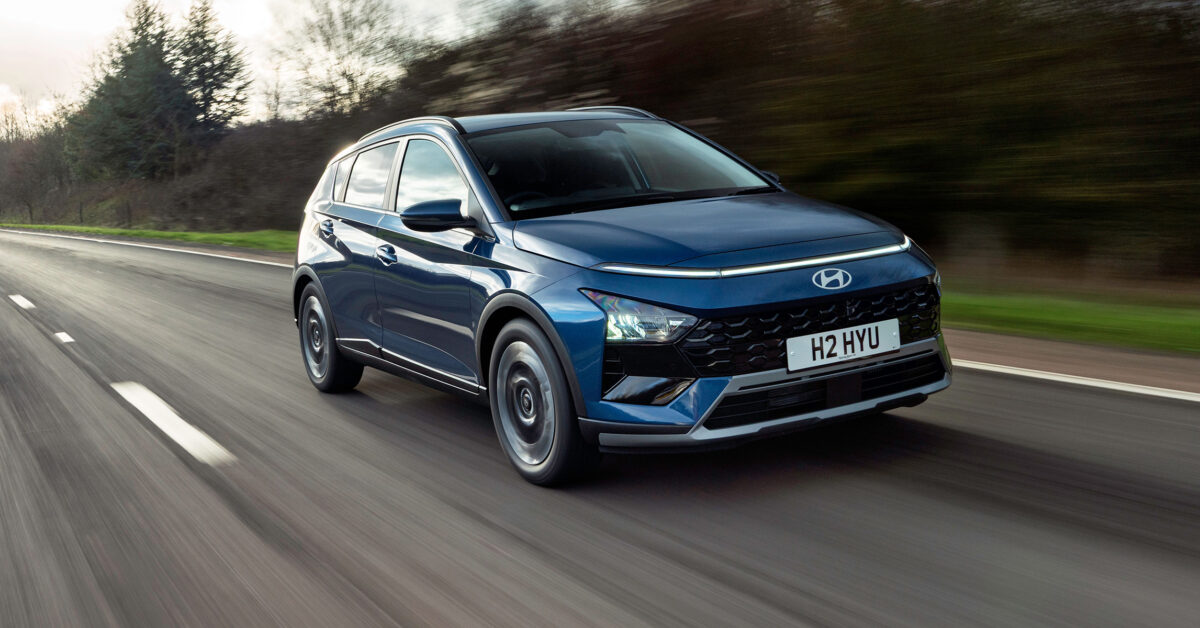
The Bayon is a bit of an oddity in the Hyundai range – marketed as a small SUV, it has a distinctive exterior treatment that gives it more of a hatchback look, together with a driving position more akin to a typical car than the elevated view of many of its perceived rivals. But this is a car that is less distinctive than those exterior looks suggest and, as such, it tends to sit in the background of the Hyundai line-up, not really making much of a statement for itself.


Price and equipment
The potential Bayon buyer now faces a choice of one engine, a manual or auto gearbox and two trim levels, dubbed Black Line and Tech Line. Prices start at just under £24K for the Black Line manual, the auto adding just over £1K to the bill.
Notable features on Black Line versions include 16-inch alloy wheels, heated front seats and steering wheel, a driver’s display and central touchscreen (each ten inches in size), Apple CarPlay and Android Auto compatibility, and rear parking sensors with a camera.
Upgrading to Tech Line costs another £1,500 – additions include 17-inch wheels, keyless entry and start, wireless phone charging, and automatic air-conditioning, wipers and parking sensors. Buyers also get to choose from a range of interior trims, whereas an all-black finish is (as its name suggests) standard on the Black Line.
Tech Line Bayons can also be specified with an extra ‘Tech Pack’, costing £1,000 and adding an upgraded sound system, windscreen acoustic film and a sunroof.
Standard across all versions is an extensive safety specification, including several driver aid electronics. The Bayon was crash-tested by Euro NCAP in 2021 and earned a four-star rating, which tends to be typical of cars in this sector.
Inside the car
You don’t feel like you are getting into an SUV, thanks to a low seating position, but once inside, the space available for what is a small car is definitely a plus point – rear seat legroom is particularly good, headroom a little less so. A 411-litre boot (a bit bigger than the pre-facelift version due to dropping the mild hybrid system), grows to 1,205 litres with the rear seats down, which is competitive for the segment, though not as big as the Ford Puma’s.
The dash layout is fairly ordinary, which this may surprise some after that sharply styled exterior. However, it’s generally easy to use; the central ten-inch touchscreen, a standard Hyundai fitment, is high-mounted and easy to reach, though its menus do seem a bit complex at times – a row of shortcut buttons along the base help here. The climate control, meanwhile, has its own panel with proper controls.
The generally black finish on our test car does tend to highlight the hard plastics, of which there are plenty, adding to the rather ordinary feel of one’s surroundings.


Under the bonnet
When launched, the Bayon offered a simple choice between two petrol engines. The update has removed that choice, and now you can only have your car with a 90hp unit, attached to a six-speed manual or seven-speed automatic transmission. It’s also lost the mild-hybrid assistance that was fitted pre-facelift, now running a simple petrol unit.
This manual version of the Bayon tested by The Car Expert passes through 62mph from rest in a shade under ten seconds. Combined cycle fuel economy is quoted at about 48mpg with 134g/km of CO2 emissions. The auto takes somewhat longer to 62mph at 13.3 seconds, although fuel economy and emissions are comparable.
On the road
It’s difficult to write very much about the road dynamics of the Bayon, because they are pretty innocuous – which may suit much of its target market. It goes where it’s pointed, in not that much of a hurry, and without making any real fuss about it.
Despite the low seating position, visibility is generally good. The engine sounds quite perky but this hides a somewhat underpowered performance overall. However, the ride quality is generally good – once one gets up to motorway speeds, the car will happily cruise at this pace, while in the twisty bits the steering gives the right amount of feedback.


Verdict
There’s not a lot to get excited about with the Hyundai Bayon, but this should not be seen as a criticism. This is a small SUV that basically does everything it needs to do to more than acceptable levels. As such, it should be a consideration for any buyer looking for a reliable workhorse, particularly families who simply want to drive their car all week long without having to really think about it.
We like:
• Well specified
• Easy to drive
• Spacious for its size
• Efficient
We don’t like:
• Feels perkier than it is
• Low driving position restricts vision
• Some cheap plastic trim
Similar cars
Audi Q2 | Citroën C3 Aircross | Dacia Duster | Fiat 500L | Fiat 500X | Ford Puma | Honda HR-V | Hyundai Kona | Jeep Renegade | Kia Stonic | Mazda CX-3 | MG ZS | Mitsubishi ASX | Nissan Juke | Peugeot 2008 | Renault Captur | SEAT Arona | Skoda Kamiq | SsangYong Tivoli | Suzuki Vitara | Toyota Yaris Cross | Vauxhall Crossland | Volkswagen T-Cross
Key specifications
Models tested: Hyundai Bayon Tech Line 1.0T Manual
Price as tested: £25,945
Powertrain: 1.0-litre petrol
Gearbox: Six-speed manual
Power: 90 hp
Torque: 172 Nm
Top speed: 108 mph
0-62mph: 9.6 seconds
Buy a Hyundai Bayon
If you’re looking to buy a new or used Hyundai Bayon, The Car Expert’s partners can help you find the right car
Lease a Hyundai Bayon
If you’re looking to lease a new Hyundai Bayon, The Car Expert’s partners can help you find a competitive deal

Personal contract hire deals from Select Car Leasing. Find out more