Polestar is a name that has popped into the conscious of many car buyers over the last few years, establishing itself in the UK with its electric Polestar 2 car and plenty of advertising on social media. So where has it come from?
It’s one of a number of spin-off brands that have come from existing car makers – in this case, Volvo. The diversification of the automotive market has gathered pace in recent years as established manufacturers have launched new brands that are related to, but sit apart from, their parent maker.
This has been going on for a long time – Toyota set up Lexus as a luxury brand more than 30 years ago – but has been accelerating over the last decade. Often, but not always, this has been connected to the shift to electric cars.
In addition to Toyota creating Lexus, we have also seen Nissan setting up Infiniti (which has come and gone from Europe), Hyundai creating Genesis, Citroën spinning off its DS models into a separate company called DS Automobiles, SEAT creating a sporty Cupra brand which then effectively replaced its parent and Volvo doing a similar thing with Polestar.
Never heard of Polestar? For many years the name was a badge hung on Volvo’s higher-performance models, but in 2017 it headed in a new direction, as a standalone sister brand that would market distinctive electric vehicles (EVs).
So far Polestar has launched three mainstream models with more on the way, taking a slice of the upper end of the electric market previously dominated by Tesla.
So who or what is Polestar?
Polestar is actually a bit older than its association with Volvo. It dates back to a Swedish racing team called Flash Engineering in the 1990s, which was subsequently rebranded as Polestar. The name comes from pole star, which refers to the North Star that was used for navigation by Vikings in Scandinavian history.
As Polestar’s relationship with Volvo became more formal, the company began to offer uprated performance versions of Volvos known as Polestar Performance models. In 2015, Volvo went the whole hog and bought Polestar.
Polestar produced its own concept versions of Volvo models as early as 2010 but the first standalone model, the limited-edition Polestar 1, was unveiled in 2017. At the same time the brand revealed its plans to build a new reputation as a distinct marque making performance electric models under its own badge, using Volvo’s manufacturing clout but no longer carrying Volvo branding.
More recently Polestar has experienced the growing pains familiar of several upmarket spin-off brands. In 2025 the company sold around 60,000 cars around the world, but this was not enough with the company recording heavy losses. Some of its earlier distinctions, such as only selling cars online, have been abandoned.
It was a better story in the UK, however, with Polestar sales almost doubling in 2025, and used models also proving popular. The Polestar 4 proved a big hit, with customers seemingly not deterred by its lack of a rear window.
In a bid to boost those global sales numbers closer to 100,000 annually Polestar will double its model range over the next few years. But while many manufacturers are rolling back on all-electric futures and adding new plug-in hybrid models to their ranges, Polestar management have confirmed that it will remain an electric-only brand.
When did Polestar launch in the UK?
The first evidence of Polestar as a standalone brand in the UK came in 2019 with the opening of a research & development department in Coventry. But the first retail outlet, known as a ‘Space’, did not launch until October 2020 in the Westfield shopping centre in West London.
Initially Polestar took a similar route to Hyundai’s upmarket brand Genesis, by not having a traditional dealer network but showrooms called ‘Spaces’ where customers could view a car and arrange a test drive. While showroom staff could assist with selection and purchase, the actual buying was done direct with Polestar, online.
However, again like Genesis, Polestar has realised that such an approach does not really work in the UK and in more recent times has opened a modest network of dealer outlets.
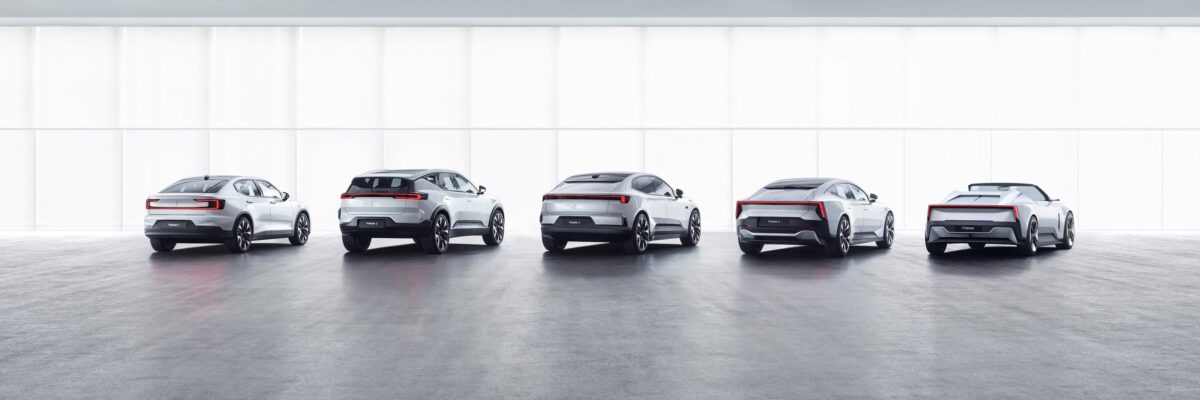
What models does Polestar have and what else is coming?
There have been four Polestar models so far, though the first doesn’t really count. The Polestar 1, with which the brand launched itself in 2017, was a plug-in hybrid GT coupé boasting more than 600hp. It was sold for only little over a year and in small numbers – and only in left-hand drive – and was actually based on an old Volvo concept car.
The three cars launched so far have all been well received, reviewers particularly liking their minimalist interior treatments – all enjoy Expert Ratings of A on The Car Expert‘s industry-leading Expert Rating index.
The Polestar 2 built the brand’s reputation as a mainstream car maker. It’s a mid-sized five-door electric car with crossover styling, similar in size and price to the Tesla Model 3. Reviews contributing to its New Car Expert Rating of A with a score of 73% generally rate the Swedish car better for build quality than the Tesla, but without the huge charging network the rival car offers.
The Polestar 2 underwent a major upgrade in 2023 before the Polestar 3 arrived in 2024. Company management claimed that the twin-motored SUV offers bags of interior space for sports car styling and performance. While reviews question the second part of that claim, particularly the innocuous driving experience, they agree it stacks up well against family SUV rivals.
The Polestar 4 also went on sale in 2024. Another performance SUV designed to fit between the 2 and the 3 in both size and cost, it immediately created headlines for its lack of a rear window, replaced by a rear-view camera. This enabled a change to the body shape freeing up more rear-seat space.
Current Polestar range on our Expert Rating Index
The Polestar 4 has since assumed the mantle of the brand’s best-selling model. Reviews tending to describe it as “good but not thrilling” have not put off customers and it now outsells all its direct rivals except the Tesla Model Y. As of February 2026 it also enjoys the best Expert Rating score of the Polestar range – a New Car Expert Rating of A, with a score of 75%.
Polestar plans to double its model range in the next few years, partly to address those recent losses. The first to arrive, in 2026, will be the long-trailed Polestar 5. This is a large four-door described by its makers as a ‘performance GT’ – it has two motors and will go on sale at prices starting from around £90,000.
Not far behind the Polestar 5 will be an estate version of the Polestar 4, hoping to add an extra element to the 4’s most popular model status. Reports suggest that when it launches it will assume the Polestar 4 moniker with the existing model becoming the 4 Coupé.
The next-generation Polestar 2 is now due to arrive in 2027, earlier than originally planned, and in the following year there will be a Polestar 7, a compact SUV and effectively a sharper-styled version of sister brand Volvo’s EX60.
Sharp-eyed readers will notice a missing number – the Polestar 6 was announced some time ago as a future cabriolet model, but it’s slipped down the company’s pecking order and is not likely to appear until at least 2028.
Where can I try a Polestar car?
At the time of the brand’s launch Polestar made much of its ‘direct to customer’ approach, with the idea being that rather than making use of a traditional dealer buyers could carry out the entire car choosing and purchase process online. There were six physical locations – not showrooms but ‘Spaces’.
Now the brand has completely reversed that decision, deciding instead that it does need a dealer network – currently there are 15 outlets spaced around the country with many adjacent to existing Volvo outlets, in particular giving Polestar customer access to long-established aftersales services.
The number will likely increase slightly to no more than 20, with potentially some of the initial ‘Spaces’ in shopping centres making way for traditional dealers.
What’s particularly significant about this company?
Polestar is heavily into sustainability, basing much of its promotion around environmental concerns. When it launched the company even announced that by 2030 it will be producing “the first truly climate neutral car” – which means it will eliminate all emissions in the car’s manufacture and operation, rather than taking the route of other manufacturers of planting trees to offset the emissions produced making cars.
Recently, however, this date has been be rolled back as it’s proving difficult to eliminate emissions throughout the supply chain – now the laudable aim is planned to happen by 2040.
Then Polestar boss Thomas Ingelmath, announcing the ‘design towards zero’ Polestar 0 project in 2021, dismissed carbon offsetting as “a cop-out”, adding that while the electric cars don’t produce tailpipe emissions in operations (electric production is another story, of course), the task now is to completely eradicate such emissions from production.
Ingelmath’s successor Michael Lohscheller has continued in similar vein, recently stating that despite being part of Geely and having access to very up-to-date hybrid technology, Polestar will remain electric-only, because its customers believe in climate change and believe the company is taking the right direction.
What makes Polestar different to the rest?
While Polestar has always tried to present itself as different to the average car maker, one distinction has been less positively embraced.
The brand has a major tie-up with software giant Google for its in-car operating system, which goes above and beyond familiar systems like Android Auto. You get three years of internet connectivity through an 11-inch touchscreen display when you buy a Polestar and access to a range of Google apps and services – you even get a full-blown web browser called Vivaldi.
But there have been two criticisms. Firstly, Google is well known for sucking a huge amount of usage data from users in any devices where its products are used, meaning you’ll constantly be sending Google info about where you are, what you’re doing, how fast you’re going, and so on.
Secondly, in the early years there was no support at all for Apple users. In summer 2022, a workaround version of Apple CarPlay was added, and in June 2023, Polestar finally announced a proper integration for Apple iPhone users through Apple CarPlay. More recent models such as the Polestar 4 now offer full-blown wireless Apple CarPlay.
Polestar has argued that its tie-up with Google will ensure its cars’ connectivity “remains as cutting edge in future as it is today”, but it’s certainly been contentious, and the company has been forced to realise it cannot ignore an Apple app so widely used in today’s cars.
A Polestar fact to impress your friends
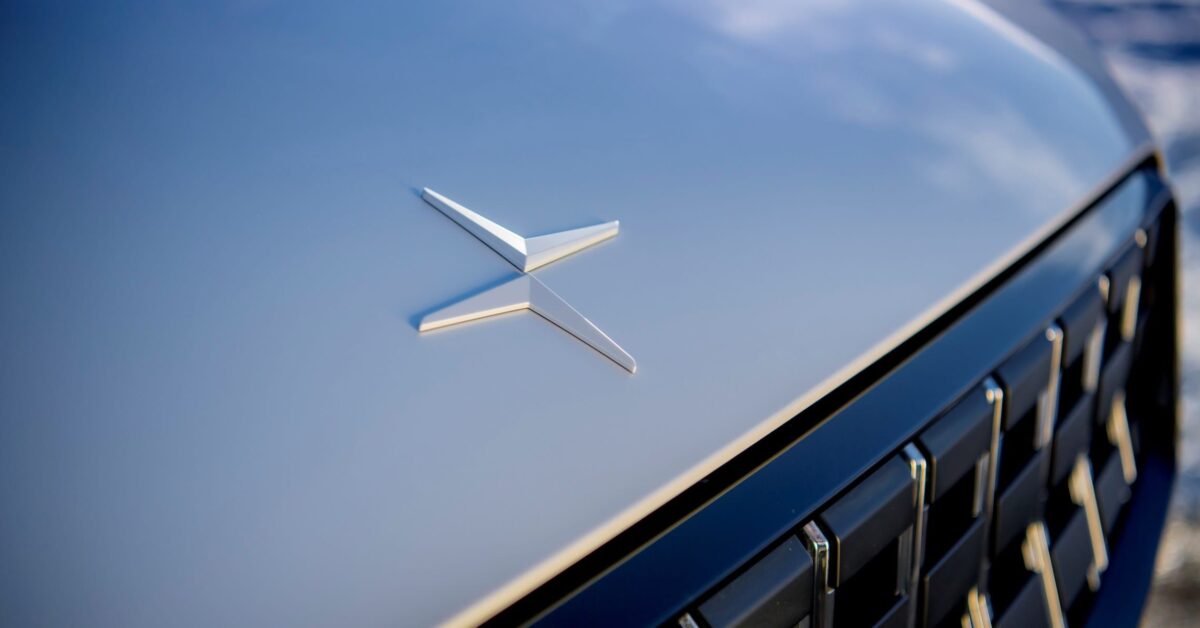
Polestar expanded quickly in Europe after launching in 2017 but for several years there was one country that you couldn’t buy the cars – France. It was all down to the new company’s badge – Citroën complained that the design, which employs two chevrons, was too close to the French maker’s famous double-chevron logo.
The dispute ended up in court with the French firm winning, and not until the dispute was finally resolved in 2022 could Polestar launch in France.

Summary
Polestar is trying hard to establish its credentials as a brand known for its next-generation technology. Autonomous motoring is firmly in its plans, on top of its sustainability and environmental commitments. Most buyers, however, will want to simply know if the cars are any good, which will govern how familiar the brand comes.
The brand claims that UK sales are buoyant – being directly compared with Tesla is a definite bonus, even if the Swedish interloper has not flooded motorway service areas with its own charging systems. While globally going through growing pains, Polestar has established itself in the UK and looks as if it’s here to stay.
You may also like:
This article was originally published in June 2023 and updated in February 2026.