Make and model: Leapmotor B10
Description: Small SUV/crossover, single electric motor
Price range: £31,495 (plus options)
Summary: The Leapmotor B10 offers generous rear space, good equipment and comfortable everyday manners. But average range, intrusive driver aids and unpolished software hold it back from the class leaders.
Introduction
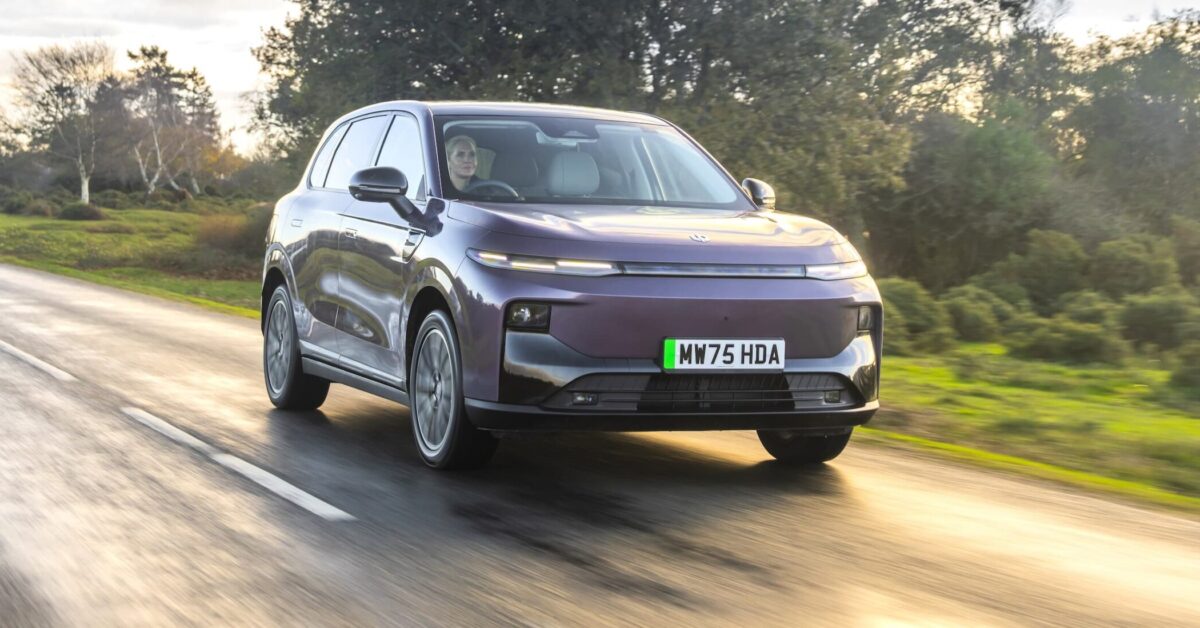
The Leapmotor B10 is the third model from the Chinese brand to reach the UK after the smaller T03 city car and the larger C10 SUV. It’s a compact electric SUV, priced at just over £30K and aimed squarely at families who might otherwise be looking at an MG, BYD, Kia or Skoda.
Unlike most rivals, there’s only one version of the B10 on offer. One battery, one power output and a fixed specification. Leapmotor’s strategy is to simplify the buying process and include a generous level of standard equipment, rather than offering multiple trims and options.
This is also the most important part of today’s new car market. Compact SUVs have become the default family choice – whether petrol, electric or hybrid – and competition is intense. To succeed here, a car needs to be practical, easy to live with and priced sensibly. It doesn’t have to be the cheapest option, but it does need to be convincing enough to make a buyer’s shortlist.
The B10 represents a clear step forward from Leapmotor’s earlier UK models. The real question is whether that progress is enough in such a crowded field.
For a broader ownership picture, see our full Leapmotor B10 Expert Rating.
Price and equipment
The Leapmotor B10 is priced at £31,500 at the time of writing, although Leapmotor is currently offering a £1,500 discount in lieu of not being eligible for a government EV grant.
Unlike many rivals, there isn’t a range of trim levels or battery options to choose from. There is one version, with one power output and one battery size.
That simplifies the buying decision, but it also removes flexibility. Competitors often offer two or three trims, sometimes with different battery sizes or performance levels, allowing buyers to prioritise range, price or equipment. With the B10, what you see is what you get.
At just over £31K, the B10 doesn’t dramatically undercut most established rivals. It sits in the middle of the small electric SUV market rather than at the bottom of it. Where it makes its case is in standard equipment.
The specification is generous. The large 15-inch touchscreen, digital driver display, panoramic roof and a full suite of driver assistance systems are all included. You are not forced into higher trims to get features that many buyers now expect.
So the B10 is not especially cheap, but it is well equipped for the money.


Inside the car
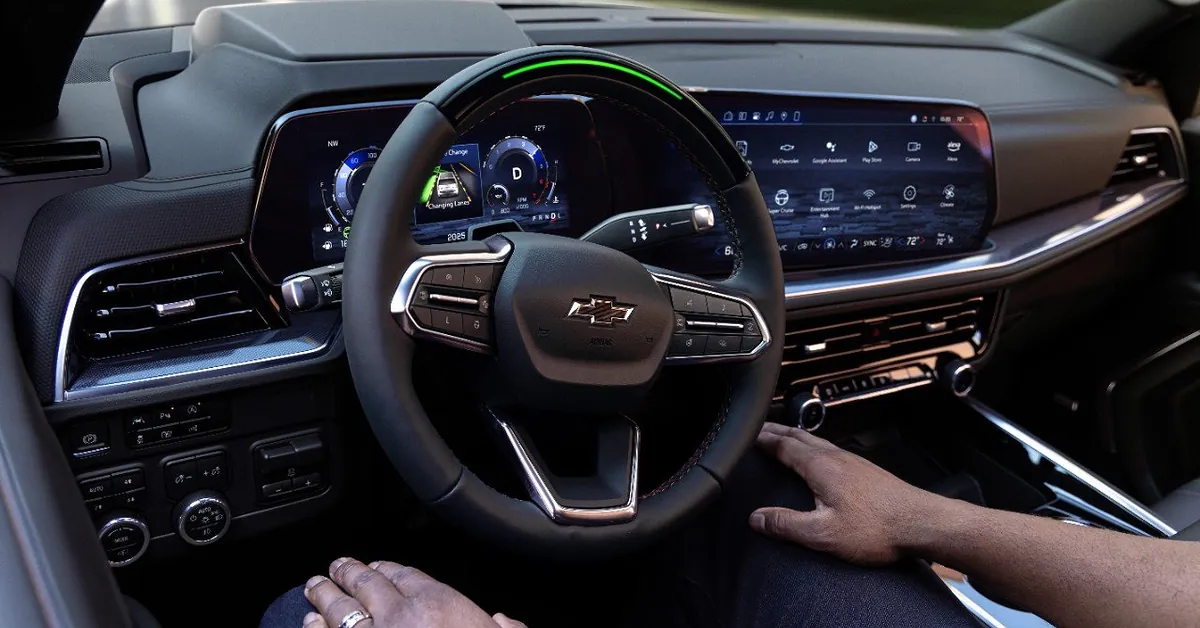
The B10 follows the now-familiar minimalist approach. A large 15-inch touchscreen dominates the centre of the dashboard and, aside from the steering wheel buttons and column stalks, there are no physical controls. Even climate adjustments sit within the screen. It looks clean enough, but also fairly anonymous. Most of the cabin is grey and black, and while nothing feels obviously cheap, it’s not especially interesting either.
Material quality is decent for the price. The plastics are mostly hard, but the panels feel solid and well screwed together. The bigger issue is usability. Almost everything runs through the touchscreen and the operating system still isn’t as intuitive as it should be. Basic adjustments can involve more taps than necessary, and given the size of the displays, it’s surprising how small the fonts and icons are. They need to be clearer and easier to read at a glance.
Space is one of the B10’s stronger points. Rear-seat legroom is generous for a car of this size and the flat floor helps make it feel airy. The boot, however, is only average. It’s usable, but not as generous as some rivals. There’s a small storage compartment under the bonnet for charging cables, although it’s barely big enough for them.
The steering wheel would benefit from more adjustment, particularly in and out, as some drivers may struggle to find an ideal position. Overall, the B10’s cabin feels practical and solid, but it lacks the polish and intuitive layout of the best cars in this class.


Driving range and charging
Battery and charging details are competitive on paper. The B10 uses a 67kWh battery, which is officially rated at about 270 miles of driving range under official government lab testing.
Fast charging is capable of up to more than 160kW, meaning a typical 10–80% session could take under 30 minutes in ideal conditions. That’s not quite class-leading, but it’s more than good enough since the majority of UK public charging points can’t supply charge that quickly anyway.
During our short launch drive, it was impossible to verify real-world figures properly. Like any EV, your real-world range will depend on factors such as speed, ambient temperature and driving style.
On the road
In everyday driving, the B10 feels well-suited to its likely role. Performance is more than adequate for urban and suburban use, with the instant response you expect from an electric motor. It doesn’t feel slow, and there’s no obvious need for more power in normal conditions. There are three different driving modes – standard, comfort and sport – but switching between them involves diving into the touchscreen menus, so most owners are not likely to bother.
Ride comfort is one of its stronger traits, particularly at lower speeds. Around town it absorbs potholes and speed humps without fuss, and on the motorway it settles into a relaxed, quiet rhythm. For family use and commuting, it does the job well enough.
Push harder on faster, twistier roads and the B10 starts to feel less settled. Over uneven surfaces at speed it loses some composure, and direction changes don’t have quite the polish of some rivals. The overall experience is more competent than engaging. This is a comfort-oriented SUV and it’s less at home on narrow, bumpy country roads.
That’s also where the driver assistance systems become most frustrating. The car will regularly beep at you and tug the steering wheel in directions you didn’t ask for. Leapmotor has improved things compared with the dreadful systems in the C10 and T03, but they’re still among the least refined on sale today. The warnings are not quite as relentless as before, which is progress, yet they remain far more intrusive than in the best competitors.


Verdict
The Leapmotor B10 is the brand’s most convincing UK model so far. It offers generous rear-seat space, a comfortable urban driving experience and a strong level of standard equipment in a package that feels better resolved than earlier Leapmotor efforts.
The B10 is not a budget disruptor. At just over £31,000, it sits squarely among established small electric SUVs rather than undercutting them. What strengthens its case is that you get a lot included for that money, with no need to climb a trim ladder to access desirable features. In that sense, it represents good value rather than a bargain.
There are still compromises. The interior design is clean but uninspiring. The touchscreen remains less intuitive than the best systems in this class, and small fonts make it harder to use on the move. Ride comfort is well suited to town driving and steady motorway work, but the car feels less composed on faster, bumpier roads.
If your priority is a well-equipped electric SUV for everyday local use, the B10 makes a sensible, rational case. If you want multiple trim and battery options, sharper driving dynamics or class-leading range for frequent long journeys, there are more polished alternatives.
As a launch impression, the B10 feels like meaningful progress for Leapmotor. Whether it becomes a standout choice will depend on how it performs in long-term UK use, particularly in areas such as software stability and real-world efficiency.
For a broader ownership picture, see our full Leapmotor B10 Expert Rating.
We like:
- Generous equipment levels for the price and strong value positioning in the small electric SUV class
- Spacious cabin and practical interior packaging
- Comfort-biased ride good for town and motorway cruising
- Decent official driving range and competitive fast charging capability
We don’t like:
- Steering and handling that feel detached and unengaging
- Touchscreen and software that distract more than necessary
- Interior design that feels plain compared with some rivals
- Driver assistance warnings can still be irritating
Similar cars
Alfa Romeo Junior Elettrica | BYD Atto 2 Electric | Citroën ë-C3 Aircross | Dacia Spring | DS 3 E-Tense | Fiat 600e | Ford Puma Gen-E | Honda e:Ny1 | Hyundai Kona Electric | Jeep Avenger Electric | Jaecoo E5 | Kia EV3 | Mazda MX-30 | MG S5 EV | Mini Aceman | Omoda E5 | Peugeot e-2008 | Renault 4 E-Tech | Skoda Elroq | Smart #1 | Suzuki e-Vitara | Toyota Urban Cruiser | Vauxhall Frontera Electric | Vauxhall Mokka Electric
Key specifications
Model tested: Leapmotor B10
Price: £31,495
Engine: Single electric motor, front-wheel drive
Gearbox: Single-speed automatic
Power: 158 kW (215 hp)
Top speed: 105 mph
0-60 mph: 8.0 seconds
Efficiency (combined): 3.8 m/kWh
Battery range: 261 miles
CO2 emissions: 0 g/km
Euro NCAP safety rating: Five stars (November 2025)
TCE Expert Rating: A (75%) as of February 2026