It was a strong start to the year for the two biggest Chinese car companies, as they continue to make huge inroads into the UK new car market.
New car registration data published today by the Society of Motor Manufacturers and Traders (SMMT) showed that the overall new market grew by 3% over the same month last year, thanks to a 4% increase in private sales and a 2% increase in fleet registrations.
But underneath the headline numbers, there were a number of key stories. The main one is the continued growth of the two largest Chinese car manufacturers, BYD and Chery Group (Chery, Jaecoo and Omoda). The second was the lower-than-expected sales of electric cars.
Chery taking more of the pie

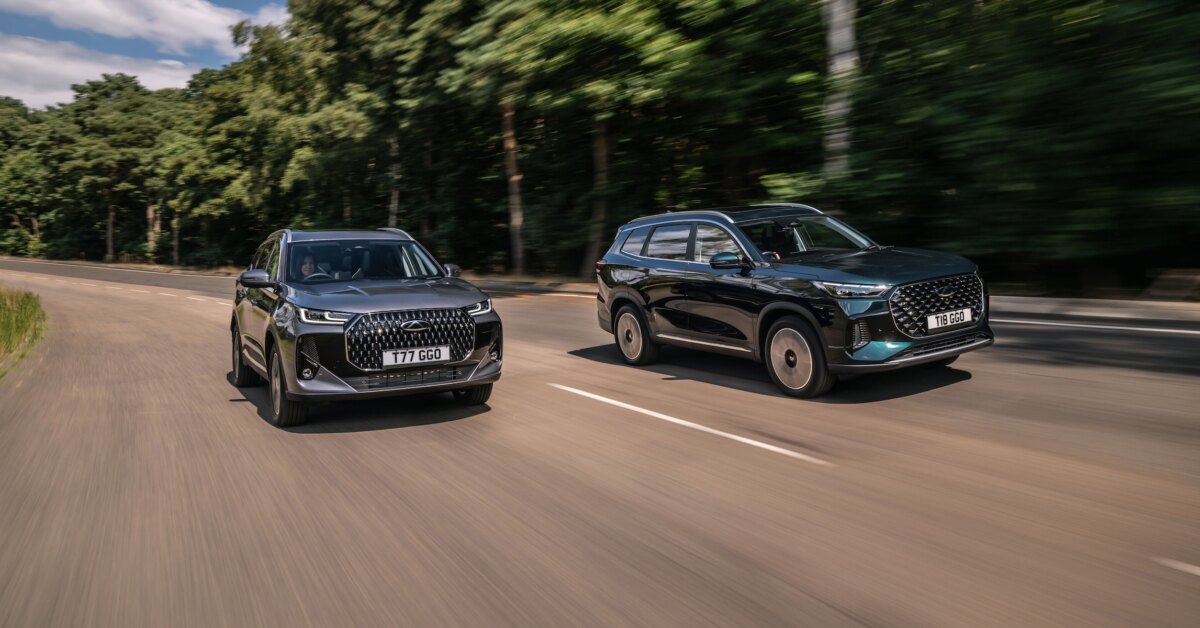
Chery Group’s three brands essentially operate as one unit (for the moment, at least). In January, their combined sales placed them third in the UK market, behind only Volkswagen and Kia. That means that they outsold giants like Ford, BMW and Audi, let alone other household names like Vauxhall and Renault.
If you add Chery Group and BYD together, they outsold Volkswagen – the UK’s biggest-selling brand for several years now. This is a pattern that has been repeating more often than not for the last few months, and is only going to continue as these two companies continue to grow rapidly throughout the year. The impact of this on the rest of the industry is going to be profound, as a growing number of other car brands see customers disappearing to their new Chinese rivals.
EVs flat, but no need to panic

EV registrations were basically the same this January as they were last year, which means that market share fell slightly since overall registrations were up 3%. But both petrol and diesel registrations fell, so it was still a net gain against the vehicles that are now four years from extinction.
Plug-in hybrids continued their surge, helped by the Jaecoo 7, BYD Seal U and MG HS, which were all in the top ten cars for January and are all predominantly/exclusively plug-in hybrids. Over the last few months, plug-in hybrids have been closing in on regular hybrids in terms of sales, and just half a percentage point of market share separated them in January.
January and February have traditionally been slower months for EV sales, although last year was an exception as numbers jumped by 42%, making it less surprising that growth wasn’t repeated this year. We’ll really need to wait until the Q1 results at the end of March to really see what EV sales are doing.
The ZEV mandate target for 2026 is 33%, so an EV market share of less than 21% isn’t a great start. However, the real target is probably going to end up being somewhere between 25-28% so we’re not a long way off in reality.
Good month, bad month
It’s the start of a new year, so here’s a quick recap on how we judge whether a car brand has had a good or bad month.
Sales numbers can fluctuate depending on a number of factors, so we allow plenty of wiggle room. If a brand outperforms the overall market by at least 10%, that’s a good month. If a brand underperforms against the overall market by at least 10%, that’s a bad month. If it’s within 10% above or below, that’s within normal expectations.
This month, the overall market was up 3.4% over last January, so brands that grew by at least 13.4% has a good month. Brands that saw registrations slide by at least 6.6% had a bad month. Got it? Good.
January was a good month for Abarth, Alfa Romeo, Alpine, Audi, BYD, Citroën, Cupra, Ford, Ineos, Jaecoo, KGM, Maserati, Omoda, Polestar, Skywell, Smart and Subaru.
Meanwhile, it was a bad month for BMW, Dacia, DS Automobiles, Fiat, Honda, Hyundai, Jeep, Kia, Lexus, Lotus, Maxus, Mazda, MG, Nissan, Peugeot, SEAT, Suzuki, Tesla, Volkswagen and Volvo.
That means the following brands were about where we’d expect to see them: Chevrolet, Genesis, Land Rover, Mercedes-Benz, Mini, Porsche, Renault, Skoda, Toyota and Vauxhall.
In terms of overall volume growth year-on-year, BYD added more than 2,400 additional cars (technically, Jaecoo did better, but it hadn’t actually started selling cars to customers in January last year). Going the other way, Peugeot dropped the most, registering 1,500 fewer cars than last January.
Volkswagen (as usual) was the UK’s best-selling brand, ahead of Kia, BMW, Ford and Audi. However, if we count Chery’s three interlinked brands together, it would put Chery Group into third place.
Sportage starts out on top

The Kia Sportage was the UK’s most popular new car in January, just as it was last year, and in 2024. In second place, the Jaecoo 7 continued its late 2025 success. The Ford Puma – the UK’s best-selling car for the last two years – finished third, ahead of the UK-built Nissan Qashqai and the Vauxhall Corsa.
The BYD Seal U made its top ten debut in sixth place, just ahead of the UK-built Nissan Juke, while the top ten was rounded out by the Volkswagens Tiguan and Golf, and the MG HS.
We’ll have our usual analysis of the top ten shortly.